After the card meanings
Learn to read
Knowing what each card means is the start. These lessons teach the craft of reading: asking a question the cards can meet, reading a spread as a whole, letting cards talk to each other, and keeping a practice that grows with you. Most of them end with something to try.
To use beside the lessons
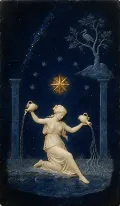
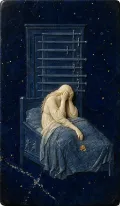
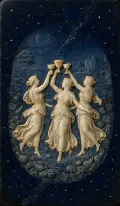

Asking and looking
Before any spread: how to ask a question the cards can meet, and how to look at an image before deciding what it means.
 Lesson 1A question any card can answerTurn “Will I…?”, “When…?” and “Does he…?” into open questions that every one of the 78 cards can meet with something you can use.6 minInteractive
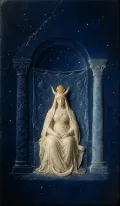 Lesson 2Describe before you interpretSay plainly what a card shows, where it sits and what the figure does, before you say what it means, so your readings rest on the artwork itself.6 minInteractive
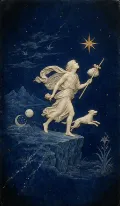 Lesson 3How this deck speaksLearn to look at Olivia’s cards through ivory, lapis and sparing gold, and to notice where the carving departs from the Waite-Smith images you may know.6 min
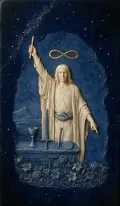 Lesson 4Fire, Water, Air and EarthRead the four suits as four qualities, notice which of them gather or go missing in a spread, and turn what you notice into a better question.6 min
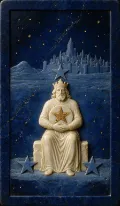 Lesson 5Reversed cards: choose your approachLearn the main ways readers interpret an upside-down card, choose one before you shuffle, and apply it consistently, or read every card upright with confidence.5 min
Reading a spread
How a position changes a card, how to see the whole before the parts, and how to say what a spread is about in one sentence.
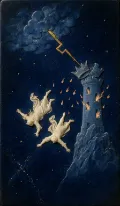 Lesson 1The position changes the cardRead each place in a spread as a question, so one card gives a different, fitting answer wherever it lands, and check your reading with the swap test.5 minInteractive
 Lesson 2Look at the whole firstSurvey a spread as one picture before reading any position: count what the draw holds, weigh it against ordinary odds, and turn patterns into questions.6 minInteractive
- Lesson 3The first card and the lastRead a spread in a steady order, framing it with its first and last cards, so the ending becomes a step you can take rather than a verdict.6 min
 Lesson 4The hard cardsRead Death, The Tower, The Devil, The Moon and two heavy Swords cards with neither alarm nor false comfort, grounding each in what Olivia’s carving shows.6 min
 Lesson 5When a card does not fitWork through a card you cannot place by restating its position, reading it with its neighbour, drawing one honest clarifier, and leaving it open without re-drawing.5 min
 Lesson 6Your spread in one sentenceGather a whole spread into one sentence of 35 words or fewer that names the cards, holds the pattern, and ends on a step or question within reach.5 minInteractive
- Lesson 7Two readings, step by stepWork through Olivia’s two worked readings one step at a time, writing your own notes first and then comparing them with one careful reader’s version.6 minInteractive
Cards in conversation
Pairs, numbers, suits, courts and elements: the ways cards speak to each other.
- Lesson 1Two cards, five waysRead any two cards together through story, contrast, noun and adjective, a shared symbol or a shared number, and keep the lens that gives the most usable question.6 minInteractive
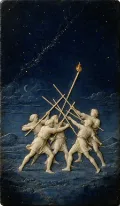 Lesson 2One number, four suitsRead a number card by its rank first and its suit second, so that any Five or Nine tells you what kind of moment it is, and where.6 minInteractive
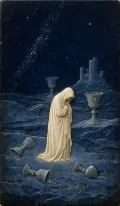 Lesson 3Suit walks and the missing stepRead cards of one suit as steps in a single story, and turn the step a spread leaves out into the question worth asking.6 minInteractive
 Lesson 4The Major names the theme, the Minor gives the addressRead a Major and a Minor side by side, letting the Major name what the question is about and the Minor show where in your week it lives.6 min
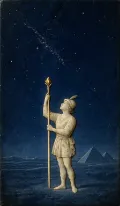 Lesson 5Sixteen courts as qualitiesRead any court card as one stage of one element, then read several courts together as a council of qualities, never as other people or their private thoughts.6 minInteractive
- Lesson 6Elemental dignities, as historyLearn the Golden Dawn way of weighing a card by the elements of its neighbours, and use it as one optional lens for noticing ease and friction.6 min
Your practice
Returning to readings, noticing repeats, reading for others with care, and designing your own spreads.
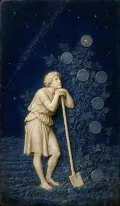 Lesson 1Return and re-readKeep a reading well enough to come back to it weeks later, then look again and write down what the cards show you now that they did not before.6 minInteractive
- Lesson 2When a card keeps coming backSee why a returning card is ordinary in random draws, count your repeats honestly, and turn the card that keeps coming back into a closer study.6 min
- Lesson 3How often to read, and when not toBuild a small daily practice that trains your attention, stop re-asking a question until a card pleases you, and know which questions belong with a person instead.6 min
- Lesson 4Reading for someone elseRead for a friend with care: ask consent, hold their question in their words, leave absent people’s minds alone, and send them off with their own step.6 min
- Lesson 5Design your own spreadBuild a three- to five-card spread for a moment in your own life, with positions that ask open questions and hold up under the same-card stress test.6 minInteractive
Where tarot comes from
An honest history: a Renaissance card game, the occult revival, the Golden Dawn, and the decks that shaped modern reading.
- Lesson 1Tarot began as a fifteenth-century card gameTrace tarot back to the card tables of Renaissance Italy, and read any Major with its first life as a trump card clearly in view.6 min
- Lesson 2How tarot became occultTrace how a fifteenth-century card game acquired an Egyptian past and Hebrew letters, and learn to sort documented history from origin myth when you read.5 min
- Lesson 3The Golden Dawn and its attributionsLearn where the titles, Hebrew letters, signs and decans on Olivia’s card pages come from, and read that layer as history you can use, not as fact.7 min
- Lesson 4Waite-Smith and MarseilleTell the two great tarot lineages apart, understand why Strength and Justice trade numbers, and read a minor card both by its pattern and by its scene.6 min
- Lesson 5The Celtic Cross, honestlyLearn where the Celtic Cross really comes from, what Waite’s ten positions first meant, and how to read a ten-card layout without an outcome card.6 minInteractive
- Lesson 6The Fool’s journey as a mapUse the Fool’s journey, a twentieth-century teaching story, as a map of the Major Arcana that gives each card neighbours and questions, never a fixed course.6 min