Cards in conversation · Lesson 1 of 6
Two cards, five ways
Read any two cards together through story, contrast, noun and adjective, a shared symbol or a shared number, and keep the lens that gives the most usable question.
Two meanings are not a reading
When two cards land side by side, the easy move is to recite one meaning, then the other, and hope they add up. They rarely do. You end with two true paragraphs and no reading, because nothing has been said about what happens where the cards meet.
A pair is read in the space between the cards. This lesson gives you five ways into that space: story, contrast, noun and adjective, a shared symbol, and a shared number or suit. Each is a lens, not a verdict, and each ends in a question you could sit with. Lay the pair left to right and keep that order; two of the five depend on it.
Story and contrast
Story reads the pair in order, with three small words: because, so, then. The first card is where something stands; the second is one way it can move. The story shows how feelings or choices can connect; it is not a forecast of what comes next. On Olivia’s Four of Pentacles both arms close in a ring round a gold-starred disc pressed flat to the chest. In the Six of Pentacles a gold-starred disc hangs in the air between a giver’s lowered hand and a pair of cupped palms. As a story: holding, then letting one go.
Contrast sets the same cards side by side instead. Ask what each has that the other lacks, then what they share. The Four has security and no exchange; the Six has exchange and a measure for it, since the giver’s other hand holds a pair of scales nearly level. Both are about how resources move, so the question becomes: what would you share if sharing did not feel like losing?
One card colours the other
In noun and adjective, the first card says what and the second says how. The noun is the subject; the adjective tints it. Order matters here, and swapping the cards gives you a different reading, not the same one reversed.
Take The Hermit, a hooded figure alone on a ledge holding out a lantern, and the Three of Cups, where three dancers raise their cups together. Hermit first: a solitude that is sociable, such as reflecting alongside friends or a quiet walk with one person. Three of Cups first: a celebration kept small, or a gathering you attend inwardly. Then ask the question the pair makes possible: which of these do you actually want?
What the images share
A bridge symbol is anything the two pictures have in common: an object, a gesture, a colour. Find it, then notice how each card treats it. In Olivia’s deck the same gold lemniscate, a figure of eight on its side, floats above The Magician and above Strength. Over the Magician it hangs near a raised wand and a table laid with cup, sword, rod and disc; over Strength it floats high above a bowed head, one hand resting on the lion’s mane and the other easy between its jaws. One power is directed outwards, the other works through gentleness. Open the circle Symbol Trail to follow the loop through other cards.
A shared number or suit is the quietest bridge. Two Threes share a stage of growth: the Three of Pentacles is skill put to work in front of others, the Three of Cups feeling shared and celebrated. Two cards of one suit share an element, and neighbouring numbers show a step: each Five disrupts the steadiness of the Four, and each Six restores some balance or exchange. Read the number sections of both card pages side by side and the step becomes visible.
Keep the way that helps
You do not need all five every time. Run through them quickly, then circle the one that produced the most usable question: the one you could act on, or write about tonight.
Save the pair texts on the card pages for afterwards. Only a small share of possible pairs have one written, and that is the point: the five ways work for any two cards, including the one you drew this morning and a card from last week. Write your own version first, then compare it with one reader’s version where it exists.
Interactive
Practice: read a pair
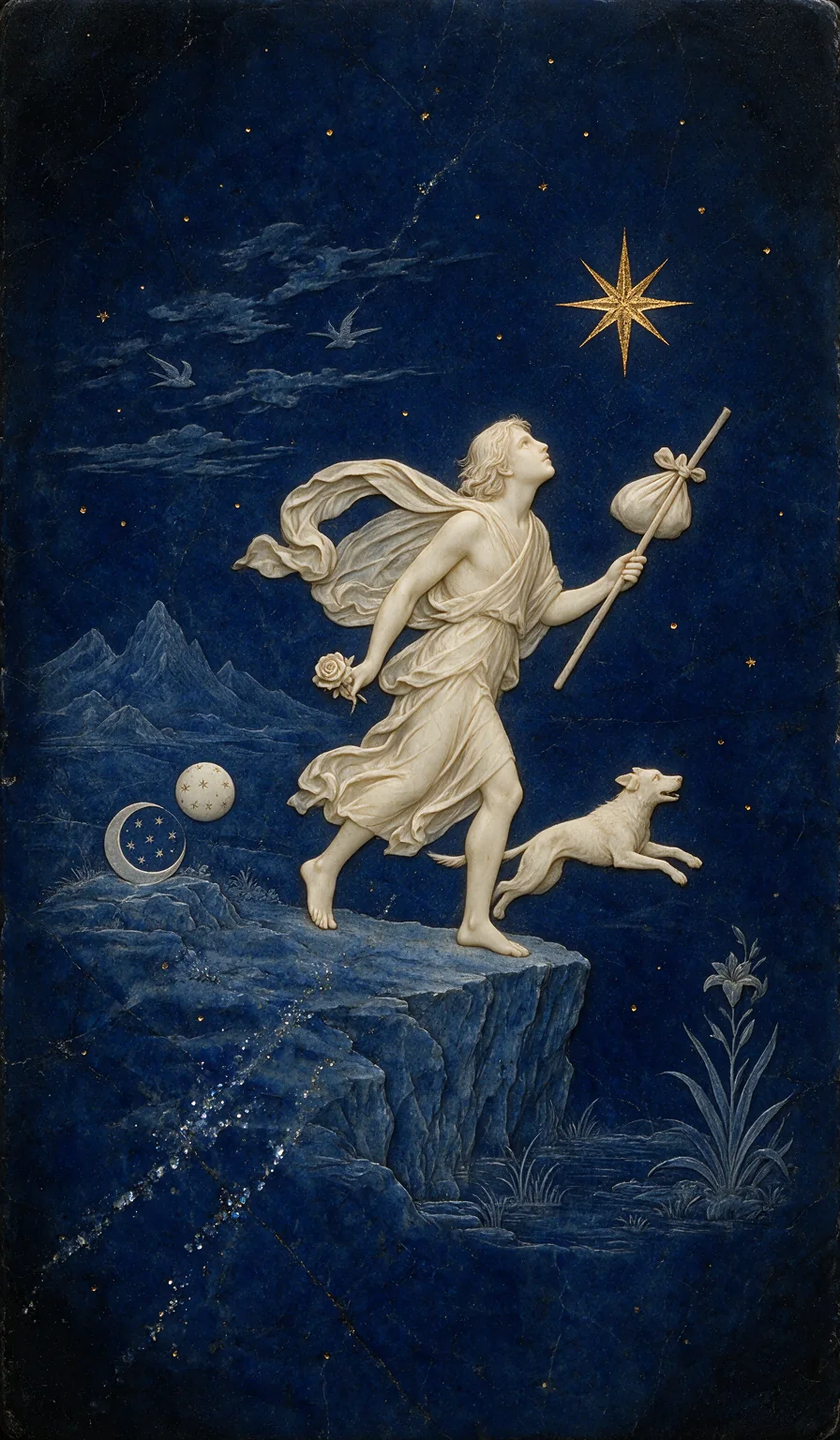
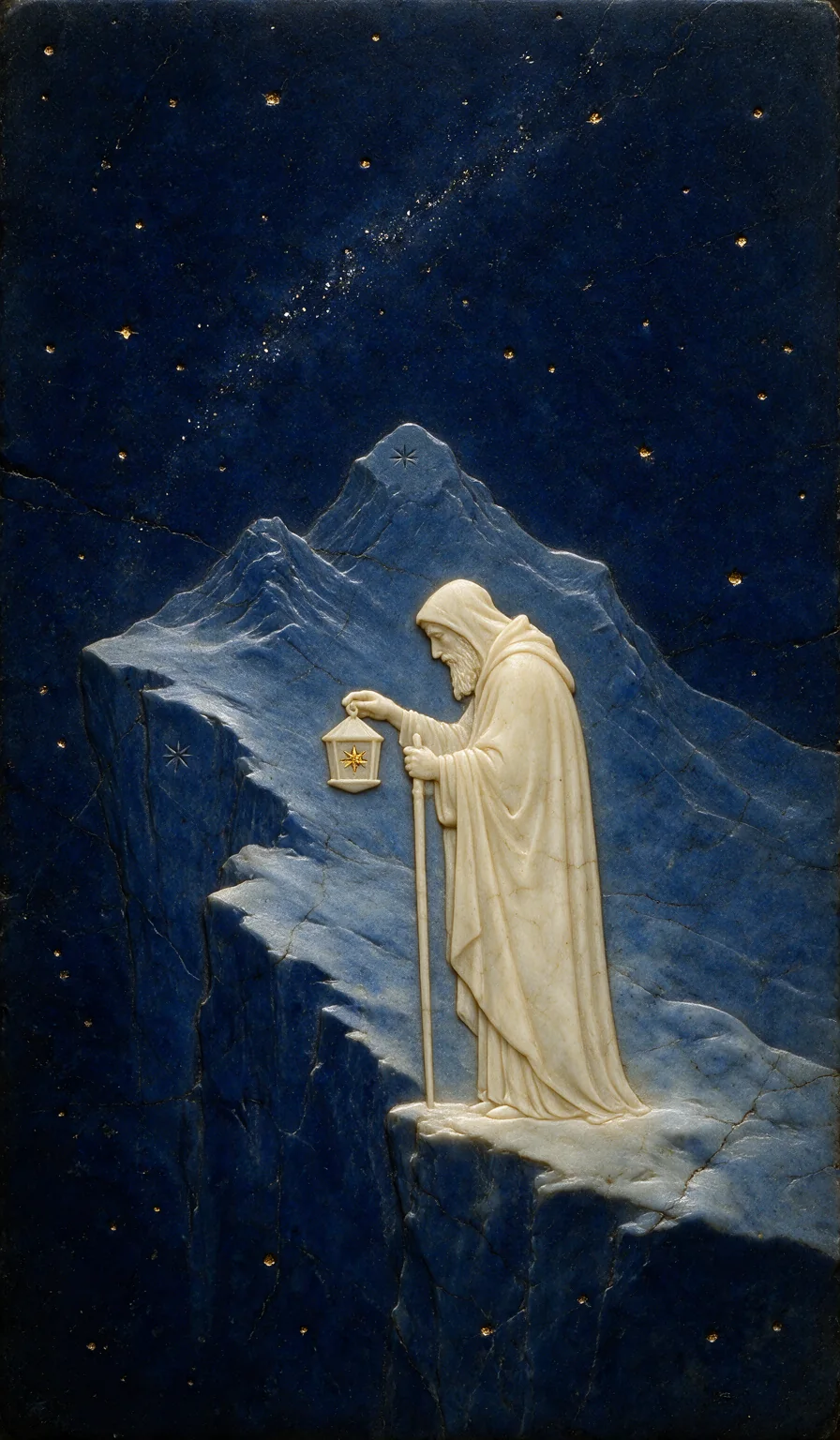
Choose a lens
Read The Fool first, then The Hermit, as two scenes of one story. What changes between them?
Try this
- Draw two cards, or pair today’s card with one from earlier in the week, and lay them left to right.
- Write one line for each of the five ways: story, contrast, noun and adjective, shared symbol, shared number or suit.
- End every line with a question, and circle the one you could honestly act on or write about today.
- Look for a symbol on both card pages, then open its Symbol Trail to see where else it appears.
- Only now read the pair texts on the card pages, and compare your lines with one reader’s version if there is one.
To remember
- A pair is read in the space between the cards, not card by card.
- Order matters for story and for noun and adjective: swap the cards and read again.
- Run all five ways, then keep the one that gives a usable question.