Reading a spread · Lesson 7 of 7
Two readings, step by step
Work through Olivia’s two worked readings one step at a time, writing your own notes first and then comparing them with one careful reader’s version.
The method, all in order
Each earlier lesson taught one move: the position frames the card, the whole comes before the parts, the first and last cards make an arc, a spread becomes one sentence. A worked reading puts those moves in order on real cards, so you can watch one step feed the next. Olivia has two. The inner compass lays eight cards on restlessness at work. At a crossroads lays five on a choice between a part-time role and a year of full-time study.
Both are one reader’s version, not an answer key. Reading them straight through teaches less than you might think, because a finished reading always looks obvious once someone else has written it. The value lies in doing each step yourself first.
Try first, then compare
Both readings move through the same kinds of step: a survey of the whole, the first and last cards, the positions in pairs, one pair read closely and, last, your own sentence. Each step opens with a short task to try. Do it: look at the cards, write a line or two, and only then open Olivia’s notes.
When you compare, don’t mark yourself right or wrong; sort the differences instead. A count you missed, such as the number of Pentacles, is a gap in method and easy to close. A detail you noticed that the notes leave out is worth checking on the card page, and if the symbol pins support it, keep it. A card you read differently asks which reading fits the position better, and why. Two careful readers can agree on what a card shows and still weigh it differently.
The inner compass: restlessness
This reading begins before any card is turned. The question arrived as “Should I quit my job?”, which asks eight cards for a verdict they cannot give. Rewritten as “What is this restlessness at work asking of me?”, it gives every position something to answer.
The survey gives the reading its shape. Two Majors, The Hierophant at the root and The Star in support, is ordinary for eight cards. Four Pentacles turns up in about 3% of eight-card draws, so Earth leads: money, routine, security. No Wands happens in roughly one draw in five, a note rather than a headline, yet restlessness with no Fire in it deserves a question. The one reversal, the Ten of Pentacles in outer influences, is read as blocked: security that exists on paper but does not feel like security. The one court, the Page of Pentacles in your perspective, offers a learner’s stance.
Later the notes find a missing step. The Five of Pentacles, in what to loosen, and the Eight, your next step, share a suit; the Six and Seven between them are absent, two unnamed steps worth asking about. The reading ends without saying stay or go, and that silence is part of the method.
At a crossroads: two paths
The second reading suits a narrower question with both options named: what to understand before choosing between the part-time role, Path A, and the year of study, Path B. Temperance sits at the heart, the Six of Pentacles on Path A, the Knight of Wands on Path B, the Three of Swords in what to look at again and the Seven of Pentacles as a grounded next step.
Two teaching points sit inside it. First, the numbers do not echo, and the notes say so plainly: not every reading has a number thread, so don’t invent one. Second, Golden Dawn readers gave Temperance the sign Sagittarius, which makes it Fire, the Knight’s own element; Olivia’s Temperance even wears an upward gold triangle, the old alchemical sign for Fire, on its breast. That kinship lets Path B carry the heart’s element more easily, but it does not crown it. The heart card asks for proportion, not the most fire, and the notes leave a question of pace: could the study be taken part-time?
What the notes never do
Notice what both readings leave out. Neither gives a verdict, a date or a likely result. Neither claims to know what a manager, a colleague or a family member thinks. The Three of Swords points to a hurt or a hard thought about the choice; the notes suggest where it might come from, then say: ask; don’t assume.
Each reading ends instead on a sentence that uses at least three cards, then a question to carry. When your own notes drift towards a prediction, rewrite them in that shape: the pattern, the cards that show it, and something to look into.
Interactive
Two readings, step by step
The question“What do I need to understand before choosing between them?”
Two named options sit side by side: a part-time role and a year of full-time study. The question asks what to understand before choosing, not which to choose. This worked reading follows the five positions of At a crossroads and uses the heart card as a measure for both paths, not as a vote for either.
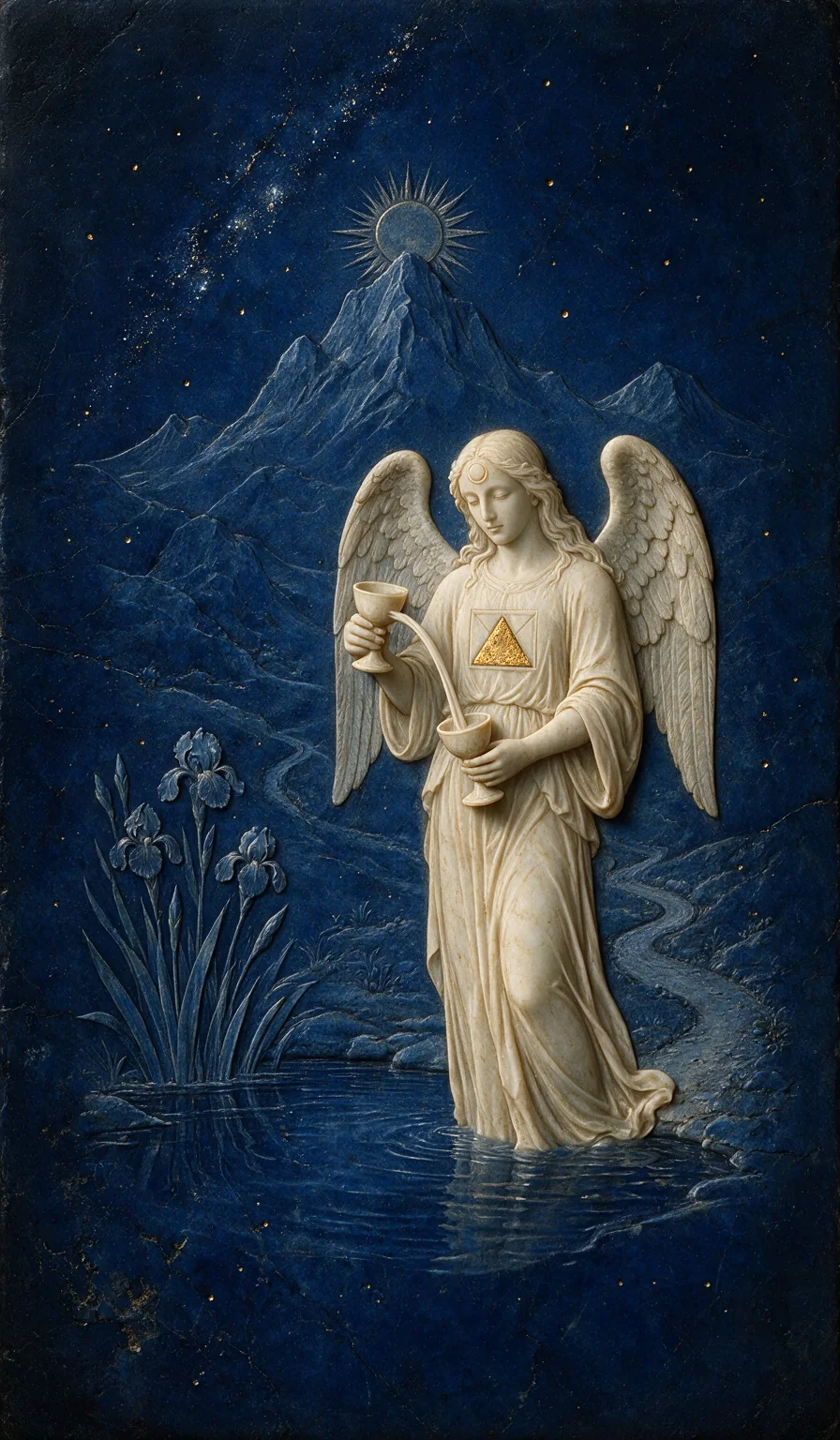 1. At the heartTemperance
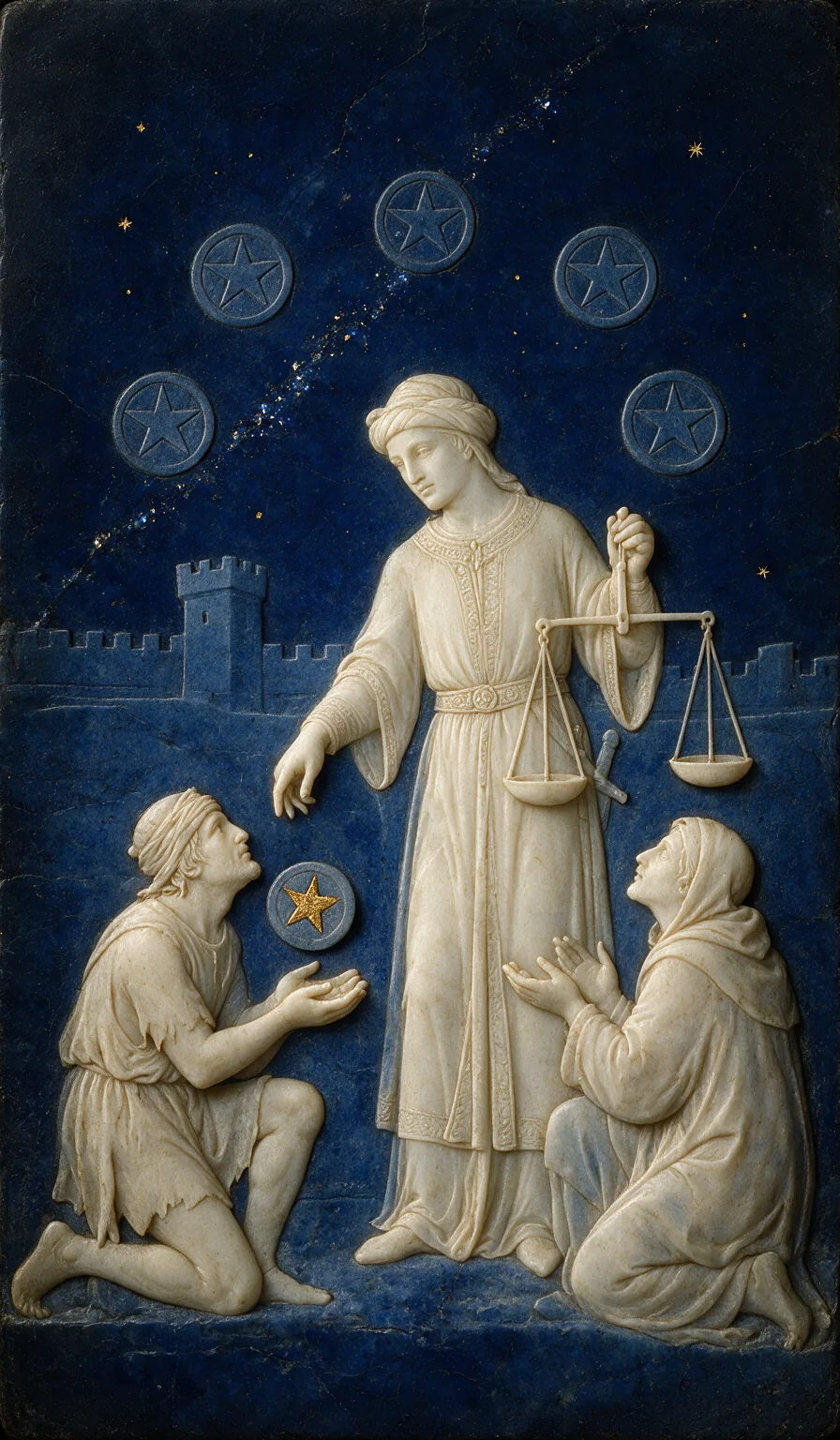 2. Path ASix of Pentacles
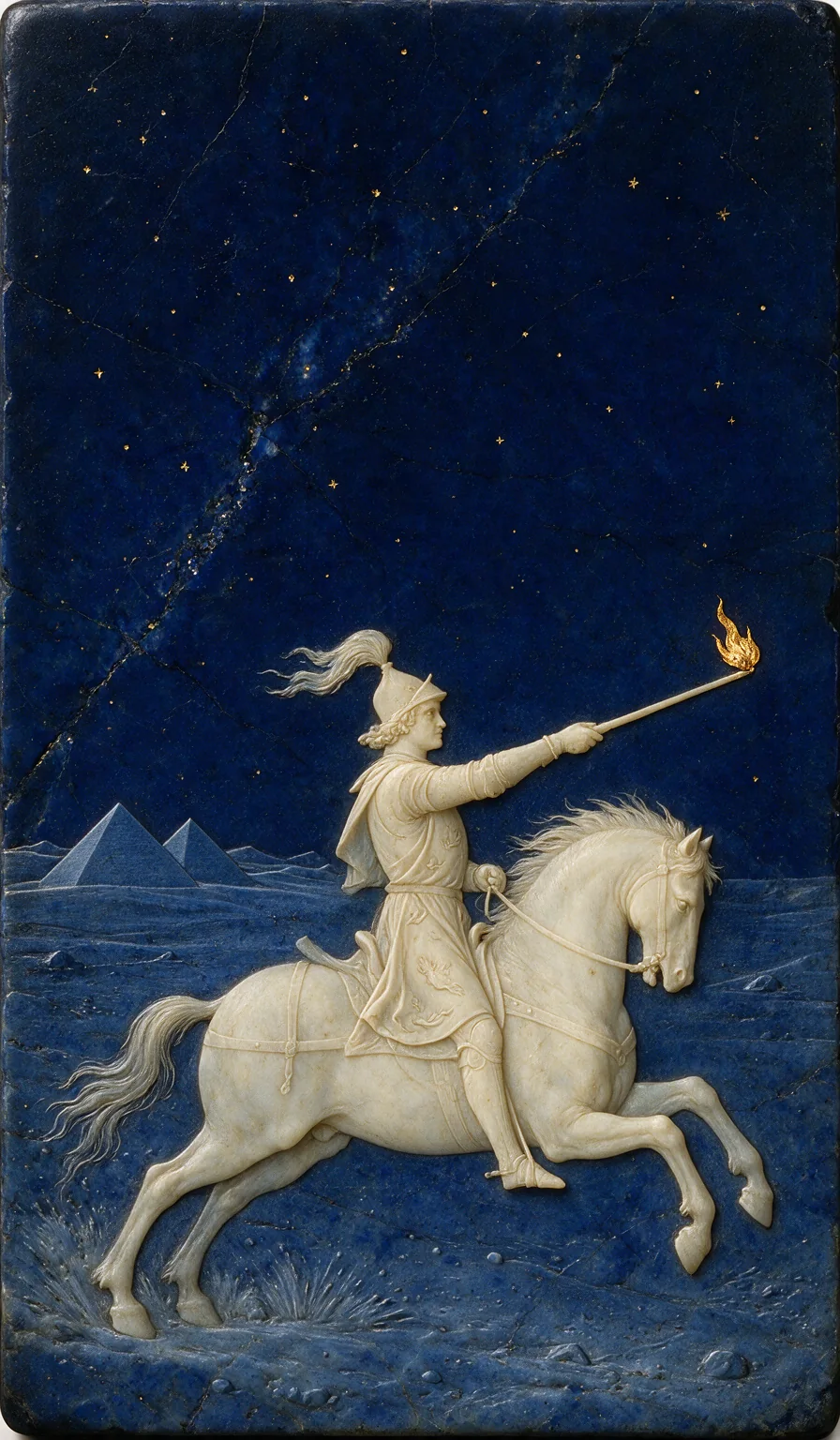 3. Path BKnight of Wands
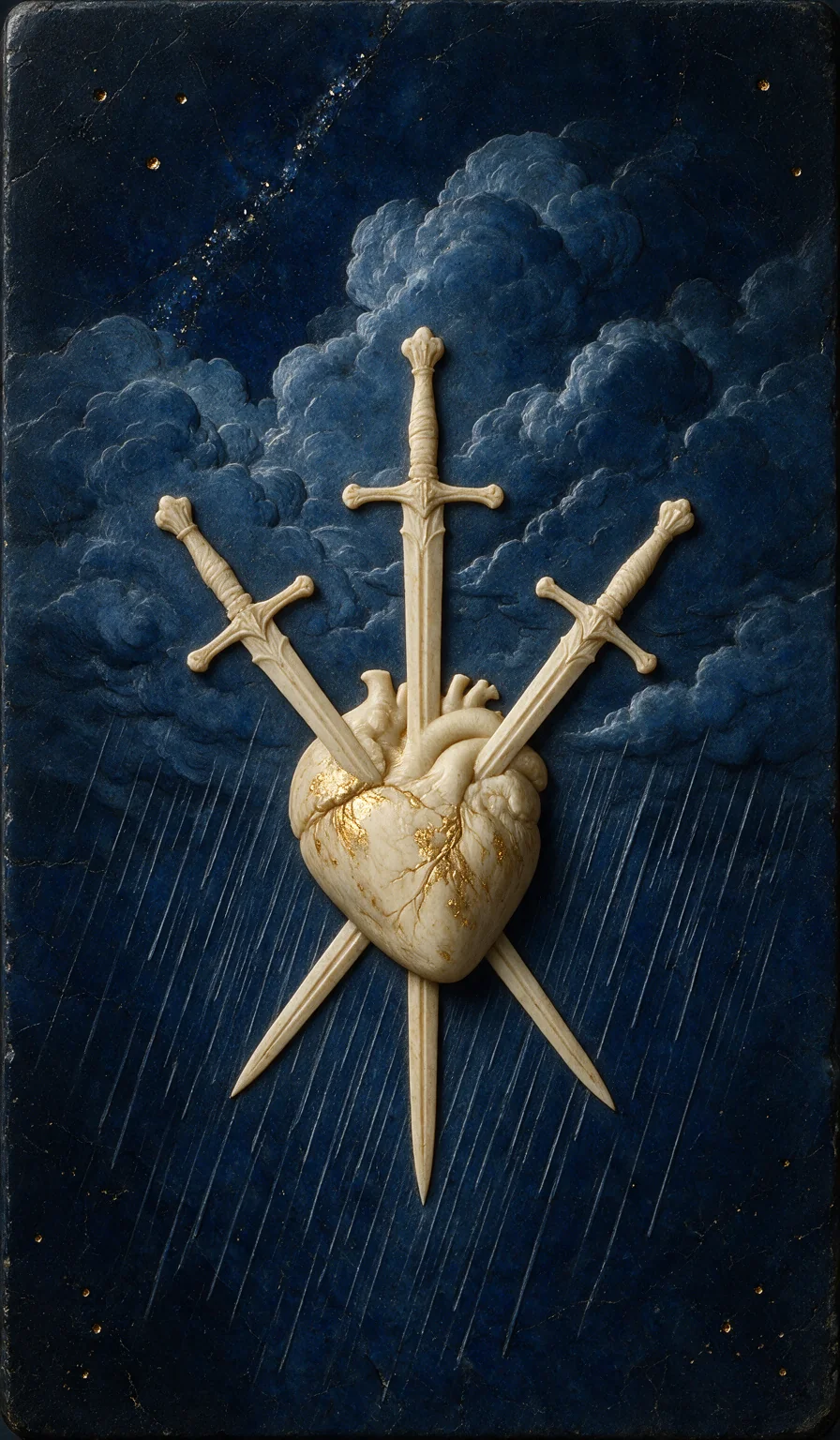 4. What to look at againThree of Swords
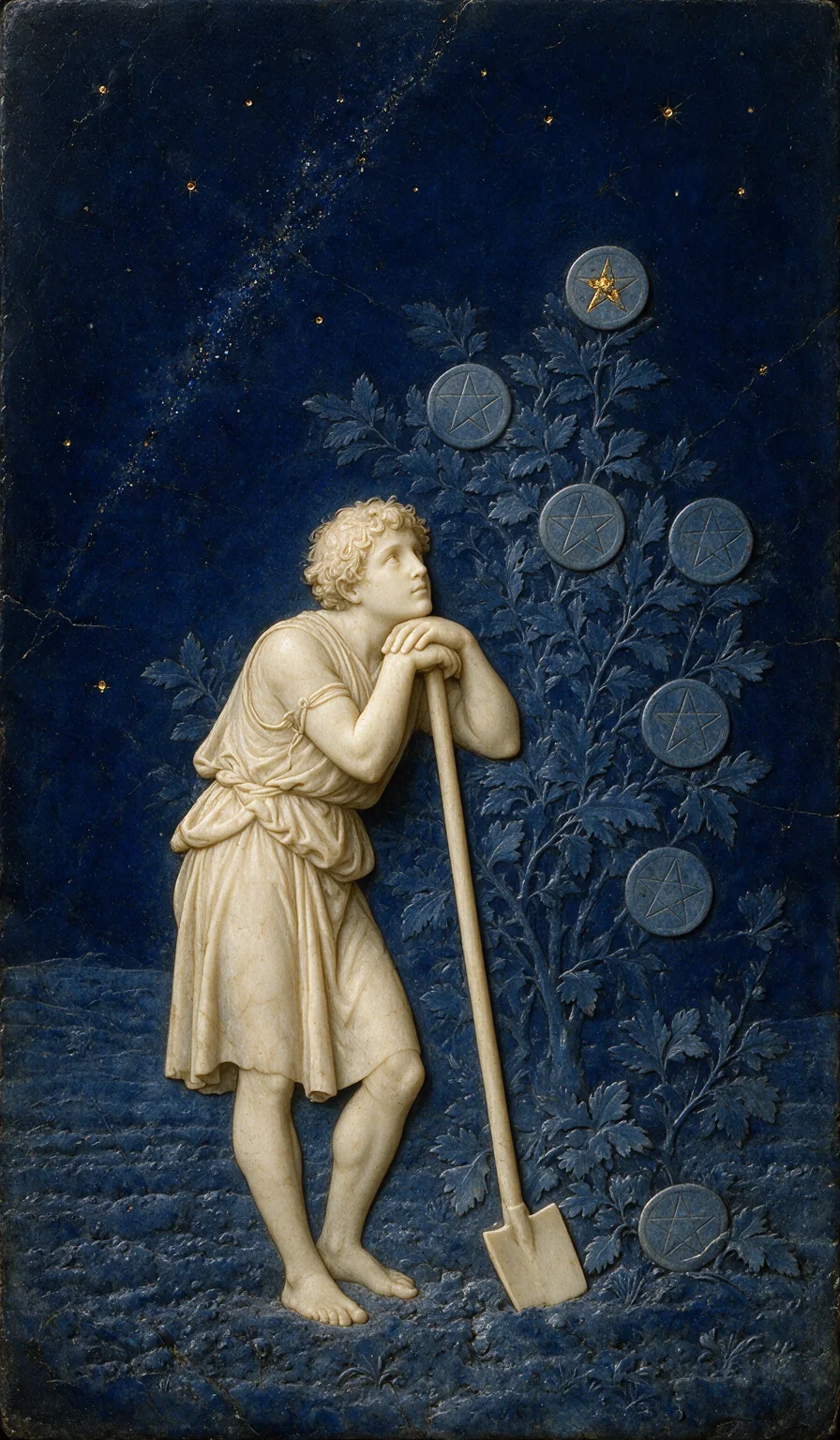 5. A grounded next stepSeven of Pentacles
Step 1 of 7
Survey the whole spread
Before reading any position, count the majors, each suit, any shared numbers, the courts and the reversals. Beside each count, write whether you think it is unusual in a five-card draw.
Try this
- Open The inner compass in the worked readings and keep Olivia’s notes closed until you have written your own.
- At each step, write a two-line note in a paper notebook, then open Olivia’s notes and compare.
- Sort every difference into three kinds: a count you missed, a detail the notes leave out, or a card weighed differently.
- Open the card page for any detail in dispute and check it against the symbol pins before deciding.
- A day later, work through At a crossroads and write your own sentence before reading Olivia’s.
To remember
- Do each step yourself first; Olivia’s notes are for comparing, not copying.
- A difference from the notes is something to sort, not a mark against you.
- A careful reading ends on a question or a step, never a verdict.