Minor Arcana · Cups
Six of Cups
Tarot card meaning: upright, reversed and the symbols of the Olivia image
The Six of Cups turns attention to memory and simple kindness: a gift given and received without calculation, and the warmth of the past you still carry.
- Upright
- nostalgiachildhood memoryinnocencekindnesssimple giftsreunion
- Reversed
- idealised pastliving in memoryoutgrown rolesdifficulty receivingmoving forward
Upright
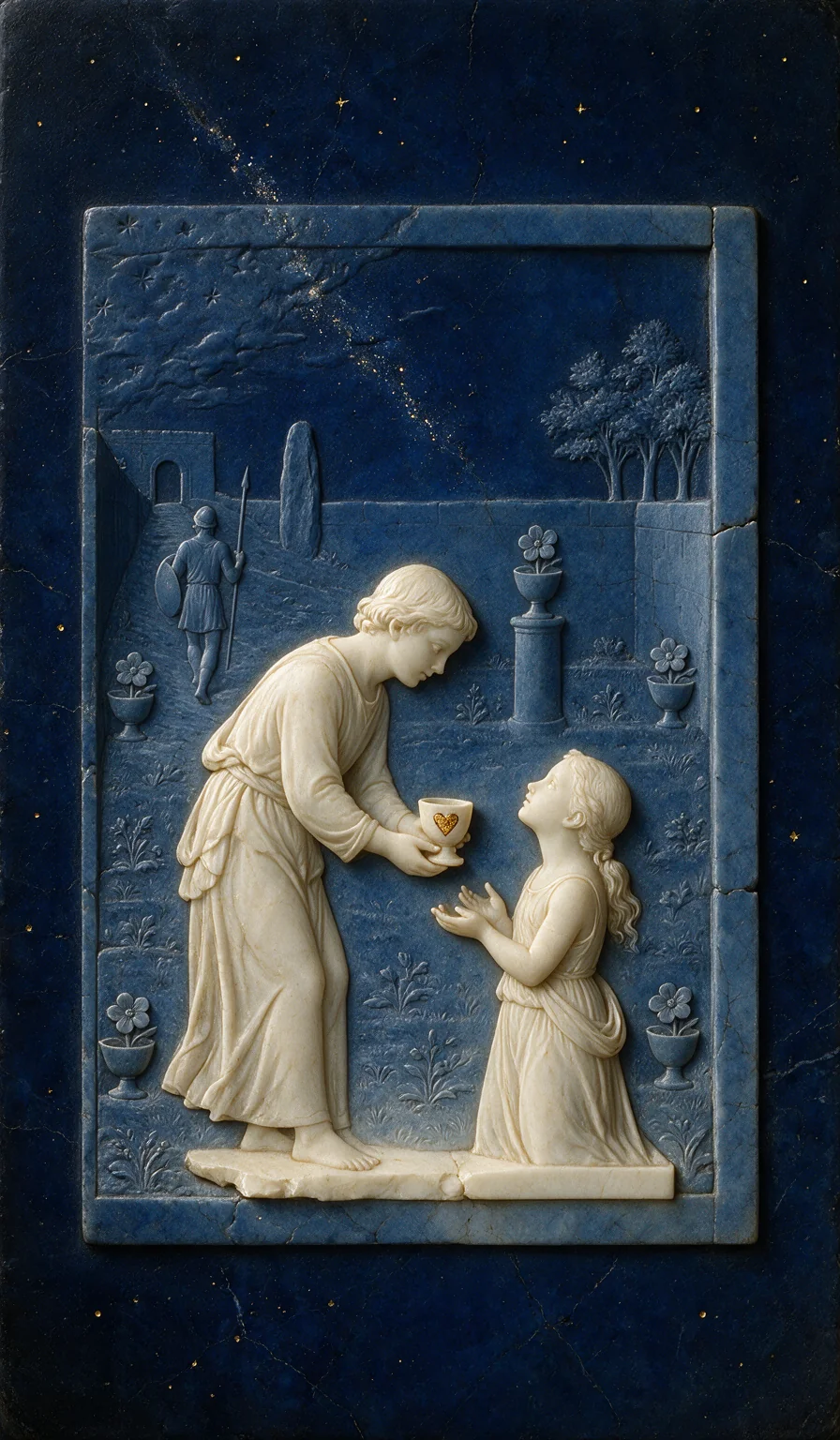
The Six of Cups is the card of memory and of kindness in its simplest form. In Olivia’s carving a taller figure bends from the left and holds out an ivory goblet in both hands, while a younger figure kneels on the right with palms open and face turned up. Nothing is being bargained for. The card draws attention to moments like this in your own life: care you were given, care you gave, and the places and people through which you first learned what warmth feels like.
Look at the cup itself. In the traditional image the cups overflow with flowers; here the offered goblet carries only a heart of inlaid gold, so the gift is the feeling. Around the pair, five more cups hold single blue flowers, and a guard walks away up the path toward the gate with back turned. The adult world is leaving the scene, and what remains is an enclosed garden at night beneath a gold river of stars.
Upright, the card can point to a reunion, an old friend or place revisited, a pleasure rediscovered, or a quality from childhood, such as curiosity, trust or play, that is asking to return. It invites you to let the past nourish you, and to notice where you might be the one holding out the cup.
Reversed
Six of Cups reversed draws attention to memory that has turned from nourishment into a place to hide. The past may be remembered more kindly than it was lived, or a longing to go back may make the present feel thin. It can also point to old roles that no longer fit: always the giver bending down, always the child waiting to be looked after.
Notice the crack in the ivory ledge beneath the figures. Reversed, the card asks you to look at that gap honestly: keep what was genuinely kind, name what was difficult, and bring one good thing forward into life as it is now. Sometimes the blocked form is simply trouble receiving; the open hands are a reminder that accepting care is a skill too.
Read the image
Every element below is carved into this card. Scroll, hover or press a number to follow it on the image.
The gold Milky Way
What you seeA diagonal band of glittering gold and pale flecks crosses the sky from the upper left, passing over the carved frame and fading above the garden wall; small stars are carved at the frame’s upper left.
What it carriesThe traditional card is set in a bright daytime garden; here the garden lies under a night sky, the hour of recollection. Gold is spent sparingly in this deck, and here it goes to starlight: light that is old by the time it arrives, like a memory, beautiful partly because it comes from far away.
Follow this symbol through the deck ↗Gatehouse and garden wall
What you seeAt the upper left a small stone gatehouse with a round-arched doorway stands at the top of a rising path; a long wall of carved blocks closes the garden, with a grove of trees beyond it.
What it carriesThe walled garden is an old image of protected, enclosed time, and childhood is often remembered exactly this way: safe, bounded, set apart. The wall shelters the scene and also cuts it off from the wider world, which is the double nature of nostalgia.
Follow this symbol through the deck ↗The guard walking away
What you seeA small helmeted figure in a short tunic, carved in lapis, walks up the path toward the arch with back turned, a round shield on the left arm and a tall spear in the right hand.
What it carriesA retreating guard appears in the traditional image too. It is often read as the watchful adult world that let a child feel safe, now moving off. The figure is leaving the scene: the present and its duties are elsewhere, and the moment inside the wall belongs to memory.
The cup on the pillar
What you seeRight of centre a plain round column rises from the garden, carved in lapis and topped by a lapis cup holding a single five-petalled flower with two small leaves.
What it carriesA cup raised on a pedestal, echoing the cup set on a stone block in the traditional image, is kept rather than used: a keepsake or a small memorial. It stands for the past you honour, admired from a little distance, still in flower but no longer in anyone’s hands.
Follow this symbol through the deck ↗The gold-hearted cup
What you seeThe standing figure bends forward and offers a plain ivory goblet with a rounded bowl, short stem and wide foot, holding it in both hands; a gold heart is inlaid on the front of the bowl.
What it carriesIn the traditional card the cups brim with white flowers. Here the offered goblet holds no visible flowers at all, only a heart of gold: the gift is the feeling itself. It is the only gold on the figures, marking simple kindness as the treasure of the scene.
Follow this symbol through the deck ↗Open hands below
What you seeThe kneeling figure lifts both hands just beneath the goblet, palms up and fingers spread, not yet touching it, while the face tilts upward toward the taller figure.
What it carriesOpen, upturned palms are the classic gesture of receiving. The small gap between hands and cup holds the moment in suspense: the gift is offered, not taken. It draws attention to the part of you that still knows how to receive simply, without bargaining or suspicion.
Follow this symbol through the deck ↗The kneeling child
What you seeOn the right a smaller ivory figure with long hair tied back kneels in a sleeveless gown with a draped sash, looking up toward the taller figure, who stands barefoot and bends down from the left.
What it carriesIn the traditional image both children stand, one shorter than the other. Kneeling makes the difference in height the whole subject: one looks down with care, the other looks up with trust. The card is often linked with innocence and the inner child, the self who first learned what kindness feels like.
Follow this symbol through the deck ↗Flowering cups at the edges
What you seeFour lapis cups stand in pairs down the two sides of the garden, each holding one carved five-petalled flower; with the pillar cup and the ivory goblet they make the card’s six.
What it carriesFlowers in cups are the traditional sign of this card: pleasure that grows out of feeling. Olivia carves them in the same blue as the garden, so they read as part of the remembered place rather than possessions. Their even spacing gives the garden a calm, tended rhythm.
Follow this symbol through the deck ↗The cracked ivory ledge
What you seeBoth figures rest on one ivory ledge that is cracked across into two pieces: the standing figure’s bare feet on the rougher left piece, the kneeling figure on the smoother right piece.
What it carriesThe crack is a detail of this carving, not of the traditional image. A single ground broken in two suggests that giver and receiver, past and present, stand on pieces of the same stone that no longer quite meet. Memory spans the gap, yet the break stays visible, asking for an honest look at what time has changed.
Follow this symbol through the deck ↗
The number
Six is the number of harmony regained. After the loss and upheaval of the Fives, the Sixes restore balance and exchange: the Six of Wands brings recognition, the Six of Swords a calmer passage, the Six of Pentacles giving and receiving in measure. In the suit of Cups, the suit of Water and feeling, that balance takes the form of emotional ease. After the spilled cups of the Five, the heart finds its way back to sweetness, often by way of memory and uncomplicated care.
The tradition
In the Golden Dawn system the Six of Cups is titled the Lord of Pleasure. It is assigned to the Sun in Scorpio, the second decan of that sign (10 to 20 degrees), and to Tiphareth, Beauty, the sixth Sephirah at the centre of the Tree of Life, expressed through the suit of Water. The Sun’s steady warmth in Scorpio’s deep water is commonly read as pleasure rooted in feeling. Aleister Crowley kept the title Pleasure. Marseille-pattern decks show six cups among flowering ornament, with no scene. Pamela Colman Smith’s 1909 card introduced two children in an old garden with cups full of flowers, the image through which the card became linked with childhood and the past.
Love, work and self
- Love
- In love and friendship the Six of Cups turns attention to tenderness without conditions: the small gestures of care that make a bond feel safe. It can point to a reunion, a shared history, or the comfort of someone who knew you long ago. It does not say whether an old connection should be renewed; it asks what, in that history, was truly mutual. With yourself, it invites the patience the bending figure shows toward the younger one.
- Work
- At work or in study the card can point to returning to something you once loved doing, drawing on early skills, or working alongside people who know your story. It also highlights generous, uncomplicated help: mentoring, teaching, sharing what you know freely. Around money, it may bring old family habits and attitudes to the surface; for now it is enough to notice them with curiosity, as memories rather than rules.
- Self
- For your relationship with yourself, the kneeling figure with open hands can stand for your younger self, and the bending one for the adult you are now. The card invites the adult to offer what the child needed: attention, patience, a gift freely given. It also asks which pleasures from early life still feed you, and which old beliefs, formed inside that walled garden, might now be gently questioned.
In a spread
Read the card through each position before you look at Olivia’s version. A position is a question, and the same card answers each one differently.
The situation
What aspect of the situation deserves attention?
Olivia’s readingAt the centre of a question, the Six of Cups can point to the past’s part in the present: perhaps an old memory, relationship or place shaping how you feel, and a simple kindness waiting to be given or received.
What complicates it
What tension or assumption deserves a closer look?
Olivia’s readingAs a challenge, the card can show nostalgia that makes the present seem thinner than it is, an old role you keep playing, or difficulty accepting care when it is offered.
A helpful next step
What small action could help you understand or respond?
Olivia’s readingAs advice, it invites one uncomplicated act of kindness, given or received, and one good quality from your past brought into today in a form that fits who you are now.
In conversation with
- Six of Cups + Five of Cups
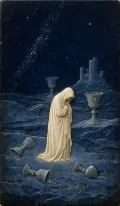
In the Five of Cups a grieving figure turns from three fallen cups while a gold-hearted cup still stands upright to one side; here a gold-hearted cup is placed in open hands. Together they draw attention to how care overlooked in grief can be offered again.
- Six of Cups + The Sun
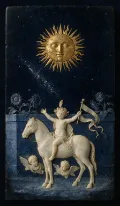
The Sun’s child rides bareback in front of a garden wall, one arm flung wide beneath a gold sun; the Six of Cups keeps its child kneeling inside a walled garden at night. Together they turn attention to innocence and play, and to joy lived now and joy remembered.
- Six of Cups + Six of Pentacles
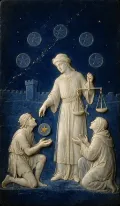
Both Sixes show a kneeling figure with open, upturned palms. The Six of Pentacles holds its scales up beside the gift; the Six of Cups gives from the heart with nothing weighed. Side by side they ask how you give and receive, and what changes when care comes with conditions.
Questions to keep
- Which memory of being cared for still warms you, and what exactly made that moment feel safe?
- What quality from your childhood would you like to carry forward into the life you have now?
- Where are you holding out a cup, and where might you let yourself simply receive one?
Ask them with three cards ↗A three-card reading in which each position asks one of these questions.
A small practice
Write down one small kindness someone showed you when you were young, then offer a similar kindness to someone this week, without mentioning why.
Cards that share its symbols
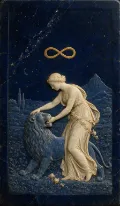 StrengthShares: The gold Milky Way · Open hands below · Flowering cups at the edges
 Three of WandsShares: The gold Milky Way · Open hands below · The cracked ivory ledge
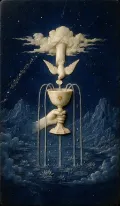 Ace of CupsShares: The gold-hearted cup · Open hands below · The gold Milky Way
 Two of CupsShares: The gold Milky Way · The gold-hearted cup · Open hands below