Major Arcana · IX
The Hermit
Tarot card meaning: upright, reversed and the symbols of the Olivia image
The Hermit steps away from the noise to look closely, carrying just enough light to see the next step and to share what it shows.
- Upright
- solitudeinner guidancepatient studydiscernmentquiet counselcareful steps
- Reversed
- isolationavoidanceoverthinkingrefused counselhidden lightrestless noise
Upright
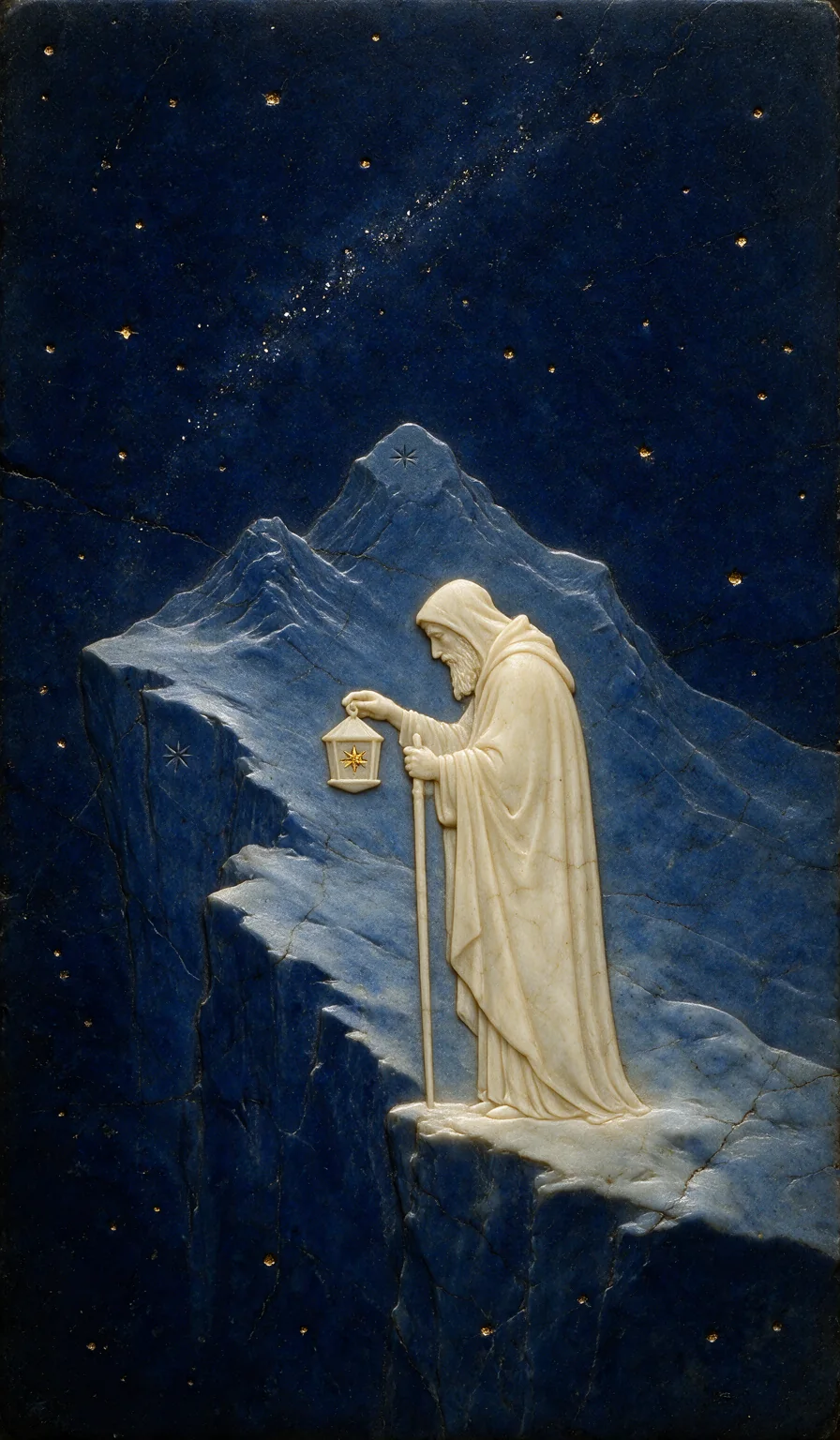
The Hermit is the card of deliberate withdrawal: stepping out of the crowd of voices long enough to hear which part of a question is truly yours. In Olivia’s carving the figure stands alone on a pale ledge, hood drawn forward, eyes lowered. The Milky Way spills across the sky overhead, yet the gaze stays on the small lantern and the ground just beyond it. Wisdom here is not a view of everything; it is the patience to see the next step clearly.
The lantern is the heart of the card. It holds a single gold star, the only carved element picked out in gold, and it is held out rather than hugged close. That gesture matters: the light is carried so that it can be used, and it is commonly read as a light for anyone climbing behind. The same eight-pointed star is cut, uncoloured, into the summit and into the cliff face, as if the landscape already holds its answers and only needs a light to be read.
Upright, the card invites a period of study, reflection or quiet craft. It can point to a mentor, a teacher or your own slow judgement. Give the question the time it actually needs, and let the staff of experience test the ground before you lean your weight on it.
Reversed
The Hermit reversed draws attention to a retreat that has lost its purpose. Solitude can harden into isolation, or reflection can circle without landing, so that the lantern is lit but never lifted. It may also point the other way: so much noise, advice and hurry that your own view cannot be heard at all. In both forms the light is there but not being used.
Consider which of the two is closer. If you have been alone with the question for a long time, one honest conversation may help more than another week of thinking. If the noise is the problem, a single protected hour can be enough. The point of the ledge is to see clearly and then come back down, not to stay on the edge.
Read the image
Every element below is carved into this card. Scroll, hover or press a number to follow it on the image.
The band of the Milky Way
What you seeA pale haze of tiny white specks runs diagonally across the upper sky from lower left to upper right, finer and whiter than the scattered gold flecks of pyrite around it.
What it carriesThe traditional Hermit stands against a plain, empty sky; the Milky Way is Olivia’s addition. It sets the small lantern against a wide band of distant light, and the figure does not look up at it. The light this card cares about is the one close enough to carry.
Follow this symbol through the deck ↗The star cut into the summit
What you seeNear the top of the highest peak, an eight-pointed star is incised into the pale blue lapis as thin engraved lines. It is not gilded, and it sits above and slightly left of the hooded head.
What it carriesThe summit is where the traditional Hermit stands: attainment, the view from the top. Here the figure stands below it on a lower ledge, and the peak keeps only an uncoloured outline of the lantern’s star. The height is marked, not occupied.
Follow this symbol through the deck ↗The pale mountain range
What you seeBehind the figure, two main peaks and their ridges are carved in lighter, greyer lapis, streaked like snow and wind-scoured stone, above a long sloping shelf that breaks off sharply at the left.
What it carriesMountains in tarot stand for effort, altitude and the long view, and the Waite-Smith Hermit stands on a snowy height. Olivia keeps the cold, high setting but lets the peaks rise behind the figure: the top is not reached, and the work here is looking rather than climbing.
Follow this symbol through the deck ↗The lowered, hooded head
What you seeThe ivory figure is shown in profile facing left, hood drawn well forward, a long wavy beard falling onto the chest. The eyes are cast downward past the outstretched hand, not up at the stars.
What it carriesThe hood is the traditional sign of withdrawal: attention pulled in from the crowd so it can be spent on one thing. The beard marks the figure as an elder, whose authority comes from long looking. The lowered gaze makes wisdom a matter of where the next step goes.
Follow this symbol through the deck ↗The lantern with its gold star
What you seeHeld out at about chest height, an ivory lantern with a peaked roof and panelled sides hangs from a ring in the fingers. Inside is a small gold eight-pointed star, the only carved element picked out in gold.
What it carriesIn the Waite-Smith card the lantern holds a six-pointed star, and older models often show it half-wrapped in the cloak. Olivia gives the star eight points, matching the two stars cut into the rock, and holds the lantern fully out: a light for the next few steps, not for the whole mountain.
Follow this symbol through the deck ↗The star on the cliff
What you seeOn the dark face of the left-hand cliff, level with the lantern and to its left, a second eight-pointed star is incised in pale lines into the lapis, small and ungilded.
What it carriesThis star is Olivia’s own addition. With the summit star it makes three stars of one shape: one gold and carried, two cut into stone and fixed. It can be read as understanding already present in the landscape, waiting for a light to be seen by.
Follow this symbol through the deck ↗The plain ivory staff
What you seeThe second hand grips a long, smooth ivory staff just to the right of the lantern. It runs straight down in front of the robe, and its tip rests near the front lip of the pale ledge.
What it carriesThe staff is commonly read as experience used as support: what you know steadies you, but you still walk on your own feet. It carries no ornament here. Set down at the edge before the body moves, it tests the ground before weight follows.
Follow this symbol through the deck ↗The heavy ivory robe
What you seeA long hooded robe falls in deep vertical folds from shoulders to ankles, the sleeves wide, the hem pooling on the ledge. Only the hands, the face and the toes of one foot show.
What it carriesThe Waite-Smith Hermit wears grey, commonly read as discretion. Olivia carves the robe in the same pale ivory as the lantern, so the figure and its light read as one material. The covering suggests prudence: what is protected is kept intact, not hidden out of shame.
The ledge above the drop
What you seeThe figure stands on a pale, almost white shelf of stone that juts out over a sheer cliff of dark lapis. Below it the rock falls away into the gold-flecked night at the foot of the card.
What it carriesHeight in the traditional Hermit is the reward of the climb. Olivia turns it into an edge: the figure stands at the rim with the lantern held out over the slope. Solitude here is attention sharpened by a real limit, where each step needs checking.
Follow this symbol through the deck ↗
The number
Nine is the last of the single digits, the point where a sequence gathers itself before the Wheel of Fortune turns at Ten. In the Fool’s journey the Hermit follows Strength in the Waite-Smith order: after learning to hold a strong force gently, the traveller withdraws to understand it. Nine is three times three, often read as ripeness. This step asks for completion through reflection, turning experience into understanding before a wider cycle begins.
The tradition
In the Golden Dawn system the Hermit is trump IX, titled “The Prophet of the Eternal, the Magus of the Voice of Power”. It carries the Hebrew letter Yod, the small flame-shaped letter from which the others are said to be formed, and the sign Virgo, mutable earth; on the Tree of Life it is the path joining Chesed and Tiphareth. Earlier decks framed the figure differently: in the fifteenth-century Visconti-Sforza cards the elder holds an hourglass, tying the card to Time, and older models often show the lantern half-wrapped in the cloak. Pamela Colman Smith’s 1909 design set the figure on a snowy height with a six-pointed star in the lantern.
Love, work and self
- Love
- In close relationships the Hermit asks for a little distance in the service of clarity, not coldness. Before the next difficult conversation, notice what you actually feel and want, apart from what you have been told you should. The card can also describe a season on your own that is doing useful work. The lantern is held out, not hidden: time alone is meant to return you with something clear to offer, including to yourself.
- Work
- At work or in study the card favours depth over visibility: research, practice, a skill learned slowly, a problem worked through without an audience. It can point to seeking out a mentor, or to becoming one by sharing what you have learned with care. In money matters the Hermit suggests taking time to understand the details before any decision, and the humility to ask someone qualified where your own light runs out.
- Self
- For your own practice the Hermit is a card of honest inventory. Which beliefs are yours, and which did you pick up from the crowd? The figure on the ledge looks at the ground near the lantern, not at the whole sky: begin with one question small enough to answer. Silence, walks, journals and early mornings suit this card, as long as solitude stays a choice and does not become a hiding place.
In a spread
Read the card through each position before you look at Olivia’s version. A position is a question, and the same card answers each one differently.
The situation
What aspect of the situation deserves attention?
Olivia’s readingAt the centre of a question, the Hermit suggests the answer needs time and quiet more than more information. What matters most is what you understand for yourself before anyone else weighs in.
What complicates it
What tension or assumption deserves a closer look?
Olivia’s readingAs the challenge, the card can point to withdrawal that has gone on too long, or to a habit of thinking everything through alone when one trusted conversation would move things forward.
A helpful next step
What small action could help you understand or respond?
Olivia’s readingAs advice, step back for a set length of time, look closely at one part of the question, then carry what you find back to the people it concerns.
In conversation with
- The Hermit + The Fool
The Fool and the Hermit both carry a staff on high ground. Olivia’s Fool looks up at a gold eight-pointed star and steps forward; the Hermit carries that same star low and watches the ground. Together they ask where boldness needs a lantern.
- The Hermit + The Star
Olivia’s Star sets a large gold eight-pointed star in an open sky while the figure pours water freely; the Hermit carries the same shape small, inside a lantern. Together they draw attention to the difference between hope that renews you and the patient, private work of seeing by the light you already have.
- The Hermit + The Hierophant
The Hierophant teaches through shared tradition and institutions; the Hermit learns alone and teaches by example. Together they ask which guidance you have received from outside and which you have tested yourself, and whether the two still agree.
Also read withWheel of FortuneEight of CupsEight of PentaclesKnight of PentaclesAll pairs ↗
Questions to keep
- What part of this question is truly yours, apart from other people’s opinions?
- What is the next single step your own light lets you see clearly?
- Once you understand this, who could you share what you have learned with?
Ask them with three cards ↗A three-card reading in which each position asks one of these questions.
A small practice
Spend twenty minutes alone with one question and a single lamp or candle, writing down only what you notice, then choose one person to tell.
Cards that share its symbols
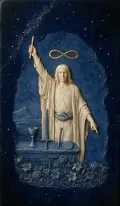 The MagicianShares: The band of the Milky Way · The heavy ivory robe · The pale mountain range
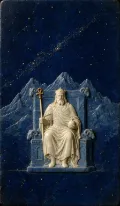 The EmperorShares: The band of the Milky Way · The pale mountain range · The heavy ivory robe
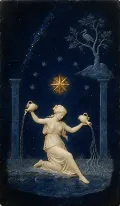 The StarShares: The band of the Milky Way · The star cut into the summit · The heavy ivory robe
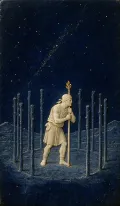 Nine of WandsShares: The band of the Milky Way · The pale mountain range · The plain ivory staff