Major Arcana · XV
The Devil
Tarot card meaning: upright, reversed and the symbols of the Olivia image
The Devil draws attention to what holds you: habits, cravings and bargains that feel binding, and the slack in the chain that makes change possible.
- Upright
- attachmenttemptationhabit loopshadowmaterial ties
- Reversed
- looseningawarenessreclaimed choicehidden cravingdetachment
Upright
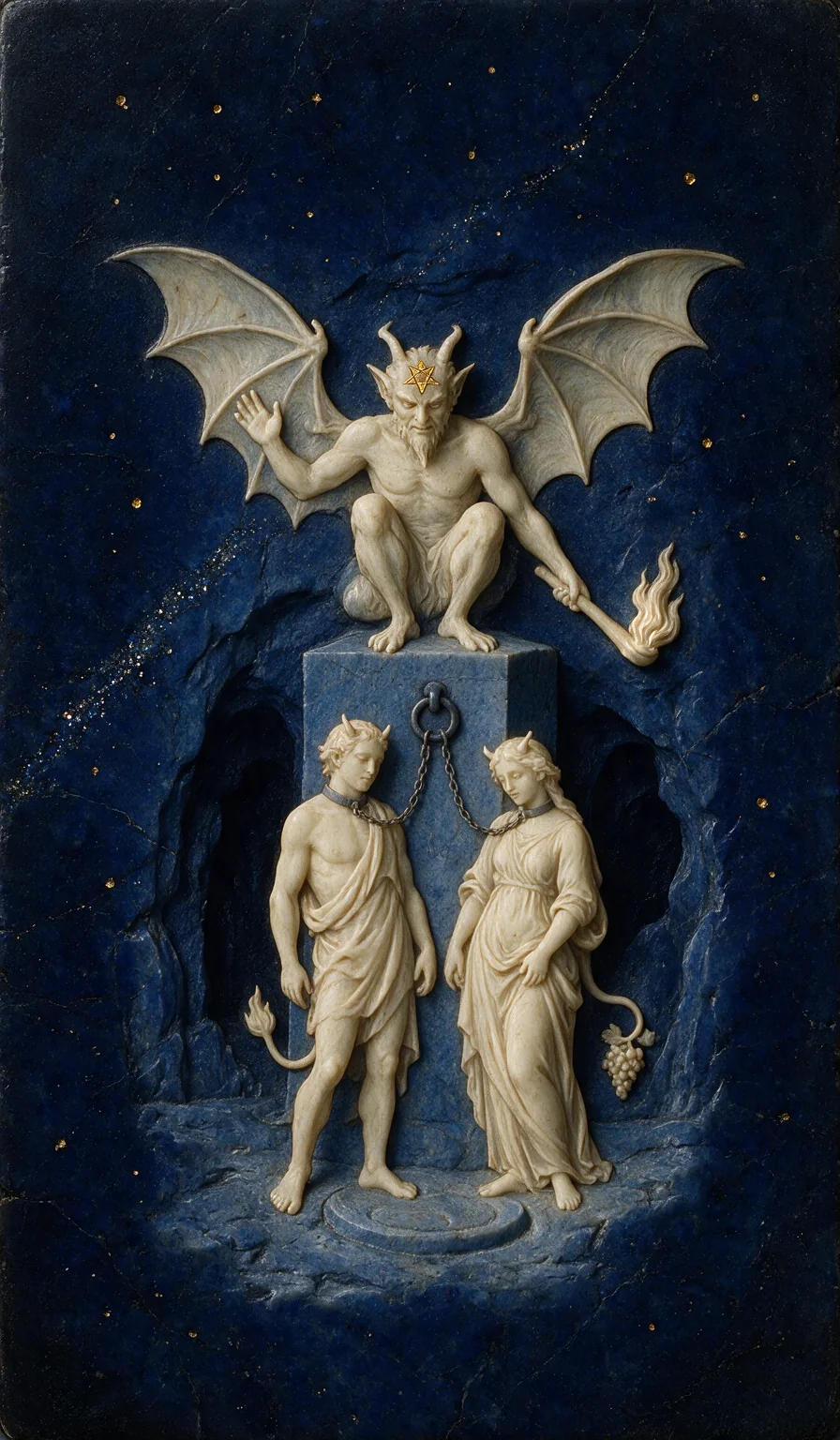
The Devil is a symbolic card about attachment, not a forecast and not a verdict on your character. It draws attention to a pattern that holds more of your time, energy or attention than you would freely give it: a habit, a craving, a relationship dynamic, a way of working, a story about what you cannot live without. The card is honest that such patterns have real pull. Its Devil is carved at full grandeur, bat wings spread wide, with a gold star on the brow that is the only gold on any figure. What binds you usually offers something genuinely valuable.
Look closely at the chains, though. Both hang from a single ring in sagging curves, and neither figure below lifts a hand to them; both heads are bowed, eyes lowered. The binding is real, yet part of its strength comes from not looking up. Even the tails, one ending in a flame and one in a bunch of grapes, show how an appetite can become so familiar that it feels like part of the body.
The card invites description before judgement. Name what the pattern gives you, what it costs, and which small part of it is within reach to change, while respecting the limits that are genuinely not yours to move. Behind the pair, the grotto has openings on both sides.
Reversed
The Devil reversed often points to a pattern you are beginning to see clearly, or a chain that is starting to loosen. You may notice the habit in the moment rather than afterwards, or feel both the pull of something and your wish to step back. That awareness is already movement, even when freedom still feels awkward to use.
The reversed card can also turn inward: a craving kept hidden, a compulsion that has moved somewhere quieter, or a swing into rigid self-denial that is its own kind of chain. Avoid replacing the pattern with self-blame. Ask what support would make one small change easier to sustain.
Read the image
Every element below is carved into this card. Scroll, hover or press a number to follow it on the image.
The gold star on the brow
What you seeA small star inlaid in gold sits in the centre of the Devil’s forehead, between two curved ivory horns and above a frowning brow. It has points straight up and straight down.
What it carriesThe traditional Devil wears an inverted pentagram, commonly read as spirit placed beneath matter. Olivia’s star is not a pentagram: its points run both up and down. As the only gold on any figure, it suggests that something of real value sits inside the pattern, turned to the wrong purpose.
Follow this symbol through the deck ↗The spread bat wings
What you seeTwo broad ivory wings open across the upper card, one on each side of the horned head. They are bat wings: thin ribbed membrane stretched between long finger bones, with a small hooked claw at the top joint of each.
What it carriesBat wings belong to a creature of night and caves, and they are traditionally set against the feathered wings of the angels in The Lovers and Temperance. They give the figure reach and a kind of grandeur, while keeping it a thing of the dark rather than of open sky.
Follow this symbol through the deck ↗The raised open hand
What you seeThe Devil’s right arm is lifted to the viewer’s left, bent at the elbow. The open palm faces outward, fingers held together and thumb apart, in front of the ribbed wing.
What it carriesThe raised hand is traditionally read as the reverse of the Hierophant’s blessing: a gesture of authority that holds attention rather than teaches. Here it is almost a greeting or a signal to stop. Either way, it asks you to notice who, or what, you have allowed to set the terms.
Follow this symbol through the deck ↗The torch held low
What you seeThe Devil’s left hand grips an ivory torch that slants down and outward to the viewer’s right, past the corner of the block. The flame burns at the lower end and curls upward in long tongues.
What it carriesThe traditional Devil holds a torch turned toward the earth, commonly read as fire spent downward: desire and energy poured into matter instead of lighting the way. The flame still rises, which is the hopeful detail. The same heat that feeds a habit can be turned to something you choose.
Follow this symbol through the deck ↗The ring and sagging chains
What you seeA dark iron ring is fixed to the front of the pale lapis block on which the Devil crouches. Two chains hang from it in sagging curves to grey metal collars around the necks of the pair below.
What it carriesThe chains are the card’s central image of attachment. They are traditionally noted as loose enough to lift off, and here they sag rather than pull taut while every hand stays free. The binding is real, yet it depends partly on standing still and not reaching up.
The horned, chained pair
What you seeTwo ivory figures stand barefoot in front of the block, one on each side of the ring, each with small horns in the hair. One wears a drape over one shoulder, the other a full robe. Both bow their heads, eyes lowered.
What it carriesThe pair traditionally repeats the lovers of card VI, now horned and tailed, bound instead of blessed. Smith drew them nude; Olivia drapes them, so they look less like people exposed than people who have settled in. Their bowed heads suggest resignation more than fear.
The flame-tipped tail
What you seeThe figure on the left has a slim ivory tail that curves out behind the thigh and ends in a small, upright tuft of flame, echoing the torch the Devil holds above.
What it carriesThe flame tail is part of the traditional image and is commonly read as passion, anger or appetite that has become part of the body’s habits. Its fire matches the Devil’s torch, as if the figure now carries a small piece of that downward flame wherever it goes.
Follow this symbol through the deck ↗The grape-cluster tail
What you seeThe figure on the right has a tail that curls out beside the robe and ends in a hanging bunch of ivory grapes, with two small vine leaves at the stem.
What it carriesGrapes traditionally stand for wine, pleasure and abundance. Ripening into a tail, they suggest comfort that has turned into dependence: something sweet that is now simply part of how you move. The same fruit, freely chosen, would mean celebration instead of need.
Follow this symbol through the deck ↗The grotto and its openings
What you seeThe scene is set in a hollow of rough blue lapis. Two dark cave mouths open behind the pair, one each side of the block, and a round ringed disc is carved into the rocky floor.
What it carriesThe traditional card places its figures against flat black; Olivia sets them underground, in the hidden place where old patterns live. Yet this chamber is not sealed: dark openings lead out on both sides, a quiet reminder that the enclosure has exits even when no one is looking at them.
Follow this symbol through the deck ↗
The number
The Devil is card XV, following Temperance and preceding The Tower. It opens the last row of seven Major Arcana, where the Fool meets forces larger than the personal self, and it begins with the shadow. After Temperance finds a measured blend, the Devil shows what happens when one ingredient takes over. Fifteen reduces to six, linking it with The Lovers: the same questions of desire and choice, now seen from inside the attachment. This step asks you to look directly at what holds you.
The tradition
In the Golden Dawn system The Devil is Atu XV, titled “The Lord of the Gates of Matter, the Child of the Forces of Time”. It carries the Hebrew letter Ayin, meaning eye, and the sign Capricorn, cardinal Earth, on the path joining Tiphareth and Hod on the Tree of Life. Marseille decks show a winged, horned figure on a pedestal with two smaller horned attendants tied to it at the neck. Pamela Colman Smith’s 1909 design drew on Éliphas Lévi’s goat-headed Baphomet and is widely read as a dark mirror of The Lovers: the same pair, now horned, tailed and chained.
Love, work and self
- Love
- In close relationships The Devil draws attention to a dynamic that holds both people in place: jealousy, dependence, a familiar argument, a comfort that has quietly become a condition. It does not describe what another person feels or intends. It asks what your part of the pattern gives you and costs you, and whether the chain is as tight as it seems. With yourself, it can point to a harsh inner voice you keep obeying.
- Work
- At work or in study, The Devil can point to overwork that feels compulsory, a role you stay in only out of fear, or a reward system that keeps you busy without satisfying you. It invites a clear look at what you are trading for security. With money matters, it suggests noticing patterns of spending or saving that run on anxiety rather than choice, and reviewing them calmly, without drastic moves.
- Self
- For your own growth, The Devil asks you to meet your shadow with curiosity instead of shame. Which appetite, fear or old bargain has grown into a tail, part of how you move without thinking? The pair in the card bow their heads; the practice is to raise yours, look at the ring, and notice how much slack is in the chain before deciding what to do next.
In a spread
Read the card through each position before you look at Olivia’s version. A position is a question, and the same card answers each one differently.
The situation
What aspect of the situation deserves attention?
Olivia’s readingAt the centre of a question, The Devil suggests the real subject is an attachment: something that holds you more than you hold it. Naming it plainly is the first step.
What complicates it
What tension or assumption deserves a closer look?
Olivia’s readingAs a challenge, The Devil can show a habit, craving or fear that keeps pulling you back, or a sense of being trapped that is partly real and partly habit.
A helpful next step
What small action could help you understand or respond?
Olivia’s readingAs advice, The Devil invites you to look up at the chain: describe one pattern honestly, including its reward, and choose one small, reversible way to test the slack.
In conversation with
- The Devil + The Lovers
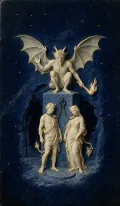
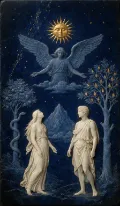
With The Lovers, the Devil’s mirror image, the same pair appears blessed and then bound. Together they ask whether a bond or desire in your life is freely chosen, or whether choice has quietly become compulsion.
- The Devil + The Hierophant
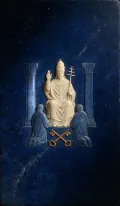
With The Hierophant, two raised hands meet: a blessing that teaches and a gesture that holds. Together they draw attention to the rules and authorities you follow, and which of them you have genuinely agreed to.
- The Devil + The Tower
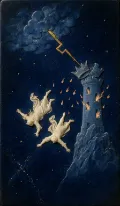
With The Tower, the card that follows it, a held pattern meets sudden release. Together they turn attention to structures that have grown too tight, and to what a gentler, chosen loosening might look like.
Also read withStrengthTemperanceEight of SwordsTwo of PentaclesQueen of PentaclesAll pairs ↗
Questions to keep
- What does this familiar pattern give you, and what does it quietly ask in return?
- If you looked up at the ring instead of down, how much slack would you find in the chain?
- Which appetite or fear has become so habitual that it now feels like part of you?
Ask them with three cards ↗A three-card reading in which each position asks one of these questions.
A small practice
For one day, each time a chosen habit pulls at you, pause for three breaths and write one word for what you were hoping it would give you.