Minor Arcana · Wands
Page of Wands
Tarot card meaning: upright, reversed and the symbols of the Olivia image
The Page of Wands is the first spark of a new enthusiasm: curiosity that looks up, picks something bright and wants to find out what it can become.
- Upright
- enthusiasmcuriosityexplorationcreative sparkgood newsfree spirit
- Reversed
- fading interestscattered startsself-consciousnessimpatiencehidden idea
Upright
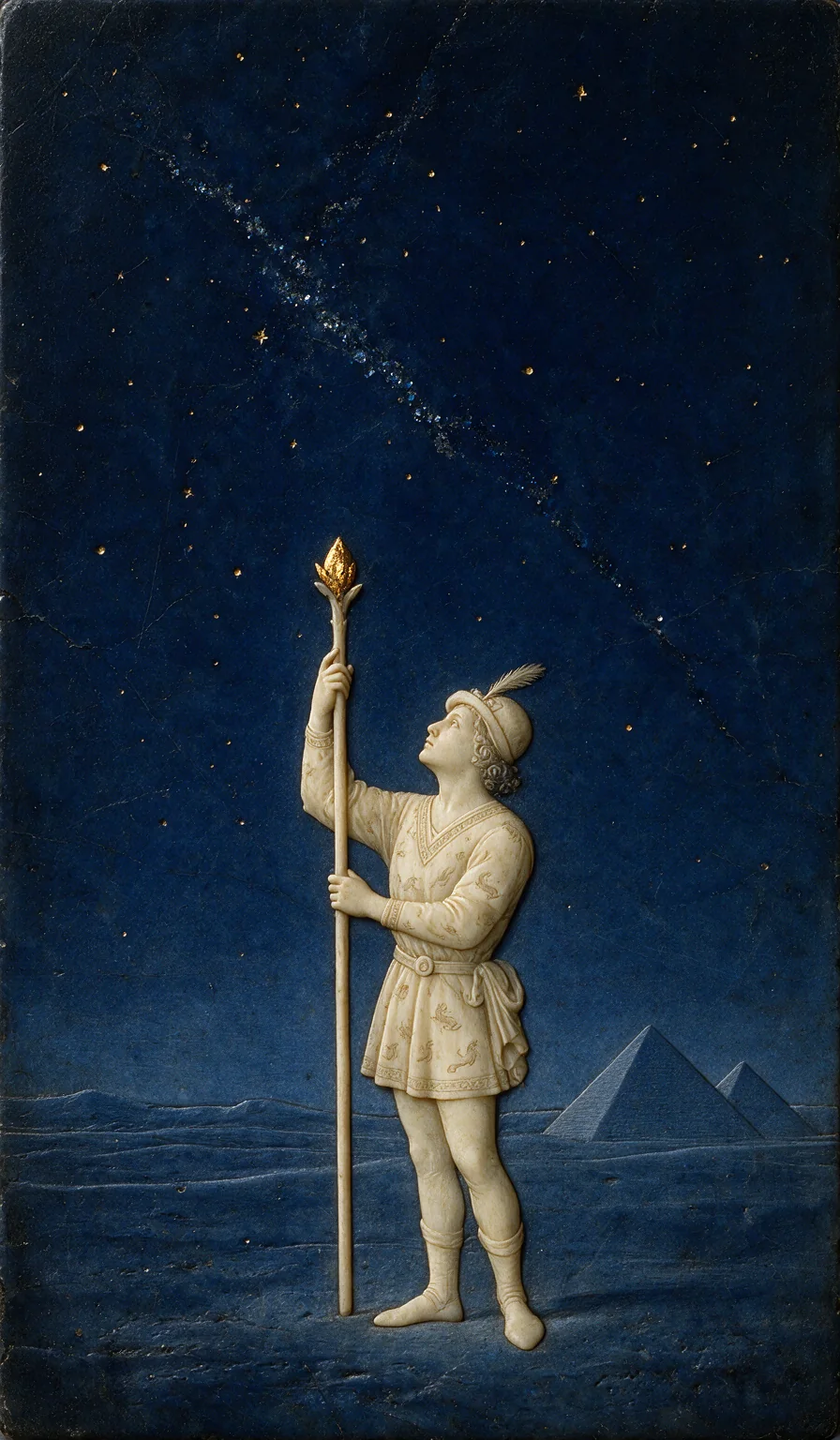
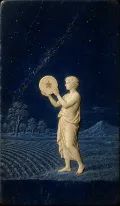
The Page of Wands is the moment an interest catches fire. Something appears that you want to know more about: an idea, a craft, a place, a person’s work, a question you cannot put down. In Olivia’s image the figure stands in a night desert, head tipped back, gazing up at the tip of a tall staff where a small gold bud of flame sits in an ivory calyx. It is the brightest point on the card, and it has not opened yet.
Pages are students and messengers. Upright, this card invites you to follow a spark far enough to learn what it actually feels like, without deciding in advance that it must become a career, a talent or a permanent part of who you are. The figure holds the staff upright and grounded, one hand high and one low, not yet swinging it at any task. This is a time for trying, asking and playing.
Notice the salamander-like creatures on the tunic and the river of stars overhead. Fire is already part of this figure, and the sky is enormous. The card draws attention to the freshness of not knowing, and to the good news that can arrive simply because you went looking. Let an exploratory attempt stay an attempt.
Reversed
Page of Wands reversed draws attention to a spark that is struggling to catch. Curiosity may fade at the first clumsy attempt, or several new interests may flare at once so that none gets the tending it needs. Sometimes the idea is there but kept hidden, in case it looks naive or unfinished to others.
Being a beginner can feel uncomfortable, especially when competence comes easily elsewhere in your life. The gold bud on the staff is small and closed; it does not need an audience to be real. Lower the stakes: choose one spark, give it a short and private session of play, and see whether it is still warm afterwards.
Read the image
Every element below is carved into this card. Scroll, hover or press a number to follow it on the image.
The gold flame-bud
What you seeAt the tip of the staff, two upward-curving ivory sepals cup a pointed shape of gold, half bud and half flame; it is the brightest point on the card.
What it carriesIn the traditional image the Page’s wand sprouts green leaves, a sign of living growth. Here the staff is bare and ends in a closed gold bud that is also a flame, the same bud that crowns Olivia’s Ace of Wands: the spark is real and precious, but has not yet opened.
Follow this symbol through the deck ↗The upturned face
What you seeThe ivory figure is carved in profile, head tipped back and chin lifted, eyes raised toward the gold tip of the staff and the sky beyond it.
What it carriesPages are the suit’s students, and this one learns by looking up. The lifted gaze is wonder before skill: attention caught by something bright and not yet understood. It suggests curiosity as the first form that desire takes.
The feather in the cap
What you seeA single carved feather rises from a small ornament on the band of a rounded ivory cap and sweeps back toward the right, above a cluster of tight curls at the nape.
What it carriesA plume on a cap is an old sign of the messenger, the herald who runs ahead with news. Light and lifted by air, it also hints at how quickly a Page of Fire can move from one enthusiasm to the next.
The glittering sky band
What you seeA diagonal band of silvery-blue crystalline sparkle crosses the upper lapis sky from the upper left down toward the right, scattered with tiny gold star flecks around it.
What it carriesThe traditional Page of Wands stands under a plain daylight sky. Olivia sets the scene at night beneath a river of stars, so the Page’s small flame looks up into something vast: a beginner’s spark measured against everything there is still to explore.
Follow this symbol through the deck ↗Gold star flecks
What you seeSmall points of gold are scattered across the dark lapis sky, most of them round flecks, a few with tiny pointed rays that catch the light like miniature stars.
What it carriesStars in tarot often stand for orientation and hope. Here the gold of the stars matches the gold at the tip of the staff, as if the Page carried one small piece of that distant light close at hand.
Follow this symbol through the deck ↗The tall ivory staff
What you seeA straight, slender ivory staff, taller than the figure, rests its foot on the ground just left of the feet; the raised hand grips it at about head height, the other lower down, above the belt.
What it carriesThe wand is the suit’s emblem of Fire: will, desire and creative drive. Held upright and grounded, it is not yet used for anything. The Page is still discovering what this energy is and what it can do.
Follow this symbol through the deck ↗The tunic of salamanders
What you seeThe short ivory tunic, with a V-neck border, banded cuffs, a round-buckled belt and a sash knotted at the hip, is scattered with small curling lizard-like creatures incised in pale gold-brown.
What it carriesThe traditional Page of Wands wears salamanders, the creatures of Fire that old lore said could live in flame. Worn on the clothing, the element is part of this figure’s identity: enthusiasm carried on the body before it is mastered.
Two carved pyramids
What you seeOn the right horizon two pyramids are cut in greyish lapis, one larger in front and a smaller one set behind it to the right, their faces lightly lined.
What it carriesPyramids appear behind the Page and Knight of Wands in the traditional deck, tying the suit to the hot, dry land of Fire and to ancient learning. For a Page they suggest how old and deep the thing is that a beginner has just discovered.
The blue dune ground
What you seeLow rolling dunes are carved across the lower card in paler, textured blue lapis, their crests running in soft horizontal ridges behind and beneath the standing figure.
What it carriesThe desert is Fire’s landscape: open, dry, without shelter or signposts. It gives the Page room to roam, and a reminder that a new spark needs tending in a place where nothing else yet grows.
Follow this symbol through the deck ↗
The number
Pages are the students and messengers of the tarot court: the stage of hearing about something and wanting to learn it. In Wands, the suit of Fire, the thing being learned is desire itself: what excites you, what gives you energy, what you would do for the pleasure of it. Where the Ace of Wands is the raw spark, the Page is the first person to pick it up and look at it with wonder, before the Knight rushes off with it.
The tradition
In the Golden Dawn system this card is the Princess of Wands, titled the Princess of the Shining Flame and the Rose of the Palace of Fire, and it is attributed to Earth of Fire: fire made concrete enough to hold. The Princesses have no span of the zodiac; instead each rules a quarter of the heavens around the north pole, the throne of its suit’s Ace, and for Wands this is the quarter centred on Leo. Waite’s deck returned to the older court title Page, the Valet of Marseille decks, a standing figure with a large club. Pamela Colman Smith’s 1909 design placed the Page in a desert with pyramids behind, wearing a tunic patterned with salamanders.
As a temperament
- Temperament
- As a temperament, the Page of Wands is eager, spontaneous and openly curious. This way of being lights up at anything new, asks questions out loud and starts before the plan is finished. Its energy is more wonder than ambition: the pleasure is in discovering, not in arriving or being seen to be good.
- Gifts
- The gifts here are enthusiasm that spreads to others, a willingness to look foolish while learning, and the courage to try something without a guarantee. This Page brings fresh news and fresh eyes, and can remind a tired group or a tired self why the work once felt exciting.
- Shadow
- In shadow, enthusiasm burns fast and goes out. You may collect beginnings without finishing any, talk about ideas more than trying them, or drop an interest the moment it asks for patience. The image offers a counterweight: the staff rests firmly on the ground, and the gold bud is still closed.
Love, work and self
- Love
- In close relationships the Page of Wands can point to flirtation, playfulness or the fresh curiosity of getting to know someone, or of seeing a familiar person with new eyes. It does not tell you what another person feels. It asks what excites you in this connection, and whether you can share that openly and lightly. With yourself, it invites you to notice what makes you feel alive, and to give it a little time.
- Work
- At work or in study, this card often turns attention to a new idea, a first project, a course, or a message that stirs your interest. Treat it as a beginning: gather information, ask the people who already know, make a rough first version. The Page is not yet the expert, and does not need to be. Where money or contracts are involved, pair the enthusiasm with a practical check before committing.
- Self
- For your relationship with yourself, the Page of Wands asks what you would explore if you did not have to be good at it yet. The figure looks up with open wonder, not self-judgement. Notice the interests you have set aside because they seemed childish, impractical or too late. One of them may be the small gold bud worth tending now.
In a spread
Read the card through each position before you look at Olivia’s version. A position is a question, and the same card answers each one differently.
The situation
What aspect of the situation deserves attention?
Olivia’s readingAt the centre of a question, the Page of Wands points to a fresh spark of interest or a new beginning that wants exploring before it is judged or planned.
What complicates it
What tension or assumption deserves a closer look?
Olivia’s readingAs a challenge, the card can show enthusiasm scattered across too many starts, or a promising idea abandoned the moment it becomes awkward or slow.
A helpful next step
What small action could help you understand or respond?
Olivia’s readingAs advice, it invites you to follow your curiosity one small step: ask the question, sign up for the first session, or make a playful, imperfect attempt.
In conversation with
- Page of Wands + Ace of Wands
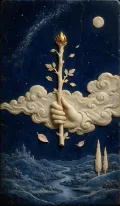
The Ace of Wands is the raw spark; the Page is the first to pick it up and study it. In Olivia’s deck the same closed gold bud tops both staffs, and together they draw attention to a new creative energy and what learning it asks of you.
- Page of Wands + The Fool
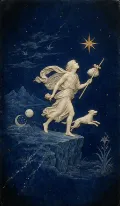
The Fool and the Page of Wands both tip their heads back in profile toward gold above them, a star for one and a flame-bud for the other. Together they point to beginnings taken for the joy of discovery rather than for a result.
- Page of Wands + Page of Pentacles
The Page of Pentacles is the patient student of practical things, while the Page of Wands learns by catching fire. Together they ask how excitement and steady practice can support each other.
Questions to keep
- What would you explore if you did not have to be good at it yet?
- Which small spark of interest have you been keeping hidden in case it looks naive?
- How could you tell a lasting enthusiasm from one that simply feels new and bright?
Ask them with three cards ↗A three-card reading in which each position asks one of these questions.
A small practice
Choose one thing you are curious about and spend twenty minutes playing with it, with no audience and nothing to produce, then note how it felt.
Cards that share its symbols
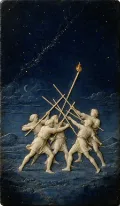 Five of WandsShares: The glittering sky band · The gold flame-bud · The tall ivory staff · The upturned face
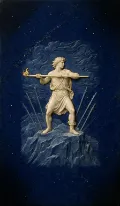 Seven of WandsShares: The upturned face · The gold flame-bud · The tall ivory staff · The glittering sky band
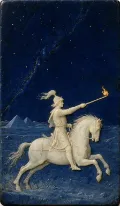 Knight of WandsShares: The gold flame-bud · The tall ivory staff · The blue dune ground · The tunic of salamanders
 The MagicianShares: The glittering sky band · The tall ivory staff · The tunic of salamanders