Minor Arcana · Swords
Ten of Swords
Tarot card meaning: upright, reversed and the symbols of the Olivia image
The Ten of Swords marks the point where a painful line of thought, effort or situation has gone as far as it can go, and stops.
- Upright
- reaching the limitexhaustionendingrock bottomletting gofirst light
- Reversed
- slow recoveryreopening old woundsresisting the endinggetting up againlingering fatigue
Upright
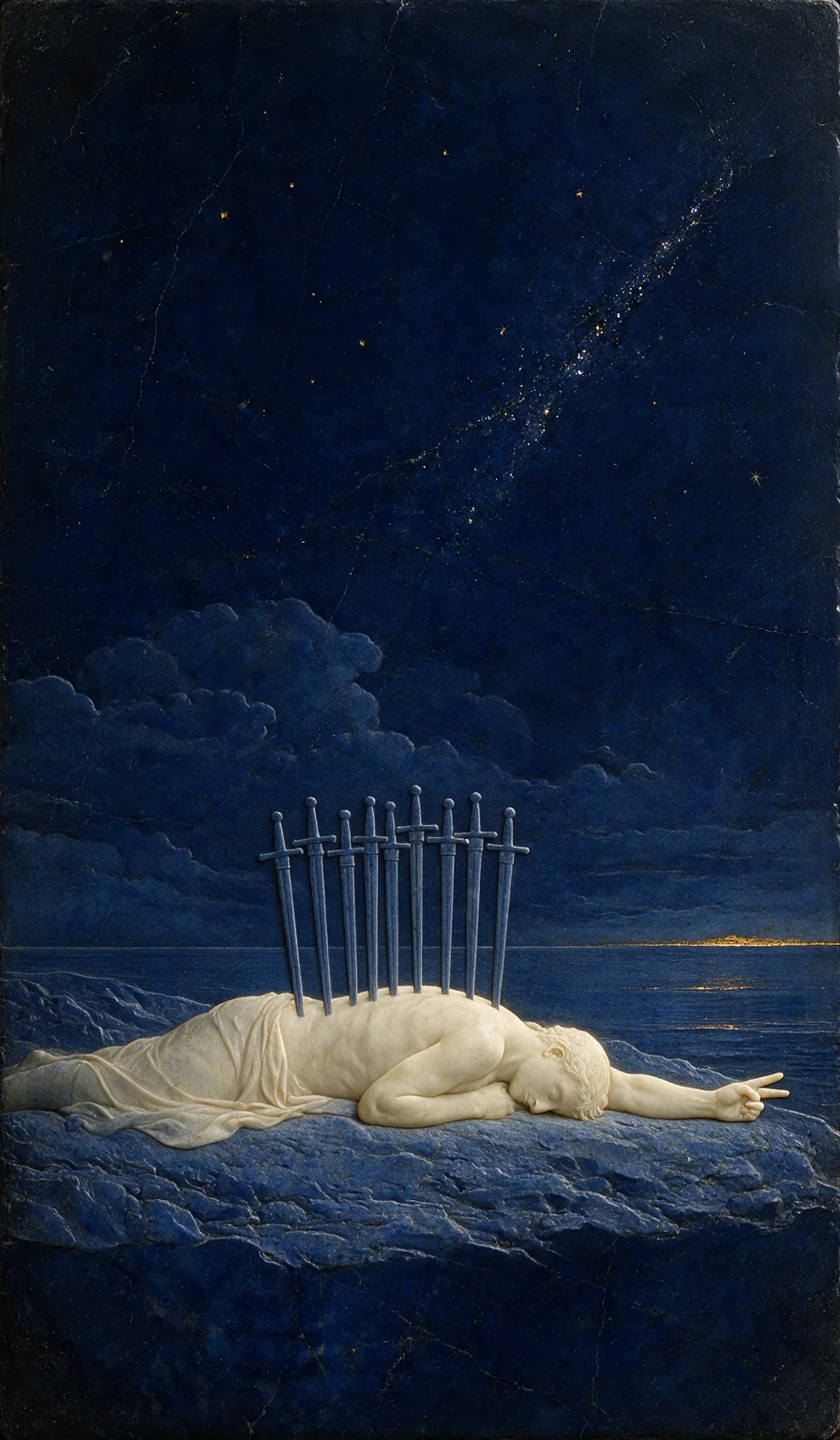
The Ten of Swords is often the most dramatic image in its suit, and it is best read as a picture of a limit, not an event to fear. It draws attention to the place where a worry, an argument with yourself, a job or a way of coping has been carried until there is nothing left to carry it with. In Olivia’s deck the figure lies prone on a ledge of lapis with blades in a row along the back, yet the face, turned toward you and resting on a folded arm, is calm, eyes closed, closer to sleep than to struggle.
Swords are the suit of Air, of thoughts and words, and Ten is the end of the count. Look closely and there are nine blades, not ten. However you read the missing one, the image shows that the adding has stopped. There may be nothing more to think through for now; the mind has done all it can in this form.
What the card offers is the view beyond the figure. A thin band of gold rests on the horizon, on the side toward which the outstretched hand reaches, and above the low clouds the sky is wide and full of stars. Upright, the Ten invites you to admit that something is finished, to rest without demanding meaning from it straight away, and to notice the first light. This is symbolic language for an ending, not a forecast.
Reversed
Ten of Swords reversed draws attention to the slow work of getting up after something has ended, or to the pull to go back and lie down under the same blades. Recovery may have begun: you may notice more room to breathe, or small signs of energy returning, while the body still feels the weight. Or the ending may be resisted: replaying what happened, reopening a closed matter, or treating one exhausting chapter as proof of who you are.
This position asks for patience with an uneven return. Getting up does not have to be one movement. Attend first to rest, nourishment and a trusted person, and let the larger story wait until you are steadier. The gold on the horizon does not need to be reached today; it only needs to be noticed.
Read the image
Every element below is carved into this card. Scroll, hover or press a number to follow it on the image.
Nine lapis swords
What you seeA close row of swords carved in greyish blue lapis, not ivory, stands upright above the figure’s back. Counted carefully there are nine, each with a round ball pommel, a straight crossguard and a groove down the blade.
What it carriesThe traditional card shows ten blades, the full count of the suit, and swords stand for thought, words and judgement. Olivia’s image shows nine on a card named Ten. One way to read the gap: the last blade is missing because this is the point where the adding finally stops.
Follow this symbol through the deck ↗Blades along the spine
What you seeThe blades enter the ivory back in an even line from the lower back to the shoulders. The middle blades stand almost straight while the outermost lean slightly outward. No blood is carved anywhere.
What it carriesBlades in the back are often read as what arrives from behind: what you did not see coming, or what you kept carrying without turning to look at it. The tidy row and the absence of blood keep the image symbolic: a limit reached, not an injury.
Follow this symbol through the deck ↗The resting face
What you seeThe ivory head, with short curled hair, lies turned toward the viewer, the cheek pillowed on the crook of a folded arm. The eyes are closed; brow and mouth are relaxed.
What it carriesThe traditional image usually keeps the figure’s face hidden against the ground, which is often read as finality. Here the face is visible and composed, nearer to sleep than to struggle. It turns the card toward exhaustion and surrender: the moment effort stops and the body rests.
Two extended fingers
What you seeAt the end of the long outstretched arm, the ivory hand rests on the rock with the index and middle fingers extended and held apart, the remaining fingers curled in toward the palm.
What it carriesIn the traditional image the hand makes a gesture commonly read as a blessing, echoing the raised hand of The Hierophant: even at the lowest point something in the figure still reaches outward. Olivia keeps the gesture and turns it toward the side where gold light lies on the horizon.
Follow this symbol through the deck ↗The ivory drapery
What you seeA thin ivory cloth covers the hips and legs in soft, deep folds and spills over the rock. The back, shoulders and arms are bare; the covered legs run to the card’s left edge.
What it carriesThe traditional card lays a red cloth over the figure, often linked with spent passion or life force. Olivia’s cloth is the same pale ivory as the body, so it reads less as a wound and more as a sheet drawn over someone resting: covering, quieting, protecting.
Gold dawn on the horizon
What you seeBehind the figure a calm sea runs flat to a straight horizon. On the right a thin band of gold light lies along the horizon line, with fainter gold glints reflected on the water below it.
What it carriesThe traditional image places a strip of yellow light beneath a dark sky, commonly read as the worst of the night ending. Gold is used sparingly in this deck, so its placement matters: the strongest gold below the sky lies on the side toward which the figure’s hand reaches.
Follow this symbol through the deck ↗Low bank of clouds
What you seeHeavy, billowing clouds carved in lighter greyish blue lapis fill the middle band of the card behind the sword hilts, rising highest on the left and thinning toward the horizon on the right.
What it carriesClouds in the Swords suit usually mark a troubled or overworked mind. Here they sit low, between the sea and the open sky, as if the storm has already passed over and settled behind the scene. Above them the night is clear.
Follow this symbol through the deck ↗A sky full of stars
What you seeMost of the upper card is open night: scattered gold flecks, a pale glittering band running diagonally from the upper right toward the centre, and one brighter rayed star on the right.
What it carriesThe traditional sky on this card is solid black. Olivia’s sky is wide and starred, and it fills the whole upper part of the image. The ending below looks small against it: the mind’s hardest night is not the whole of the sky.
Follow this symbol through the deck ↗The lapis rock ledge
What you seeThe figure lies on a broad, flat ledge of rough, bright blue lapis, its surface chipped and textured with lighter veins, dropping away to darker, cracked stone along the bottom of the card.
What it carriesThe ledge is the Ten’s literal bottom: there is nowhere lower to fall. In the Golden Dawn scheme the tens belong to Malkuth, the Kingdom, the most solid level of the Tree of Life, and this stone makes that concrete. A floor is also something to stand up from.
Follow this symbol through the deck ↗
The number
Ten is the end of a suit’s count: the seed of the Ace has grown through every stage until there is more of it than can be held. In Swords, the suit of Air and mind, that surplus is thought itself: analysis, worry and argument taken past the point where they help. Where the Nine of Swords sits up awake with its fears, the Ten is where the thinking finally stops. After Ten the count returns to the Ace, a single clear idea.
The tradition
In the Golden Dawn system the Ten of Swords is titled the Lord of Ruin. It is assigned to the Sun in Gemini, the third decan of that sign (20 to 30 degrees), and to Malkuth, the Kingdom, the tenth Sephirah on the Tree of Life, expressed through the suit of Air. The Sun’s full light in quick, doubling Gemini can be read as a mind that has analysed a matter to exhaustion; Aleister Crowley kept the single title Ruin. Marseille decks show only an ornamental pattern of blades. Pamela Colman Smith’s 1909 design gave the number a body: a figure lying face down under ten swords, a black sky above and yellow light at the horizon.
Love, work and self
- Love
- In close relationships the Ten of Swords can point to a pattern gone over so many times that it has worn you out: the same conversation, the same hurt, the same explanation. It does not say what anyone else feels or intends, and it does not decide the future of a bond. It asks whether a particular way of relating has reached its limit, and what rest and honesty would look like for you now, including in how you speak to yourself.
- Work
- At work or in study, this card can reflect a project, role or effort that has taken more than it gave, or a plan that has plainly run its course. Swords ask for clarity, so name what is actually finished and what only feels finished because you are exhausted. Before any large decision, rest. Where money or contracts are involved, a qualified person’s view serves better than deciding alone at your lowest point.
- Self
- For your relationship with yourself, the Ten invites you to stop carrying the whole weight of a hard stretch at once. The figure on the card is lying down; the body has made the decision the mind would not. Notice where you are tired and let that be information, not failure. The hand on the rock still keeps two fingers extended, and the horizon keeps its gold: something in you remains open even now.
In a spread
Read the card through each position before you look at Olivia’s version. A position is a question, and the same card answers each one differently.
The situation
What aspect of the situation deserves attention?
Olivia’s readingAt the centre of a question, the Ten of Swords can point to something that may already have reached its end. Acknowledging that plainly may matter more than any new plan or explanation.
What complicates it
What tension or assumption deserves a closer look?
Olivia’s readingAs a challenge, the card can show exhaustion treated as a verdict on your worth, or an ending you keep reopening because stopping feels harder than continuing to struggle.
A helpful next step
What small action could help you understand or respond?
Olivia’s readingAs advice, it invites you to let a finished matter be finished, rest before deciding anything large, and turn your attention toward the first small signs of light.
In conversation with
- Ten of Swords + Nine of Swords
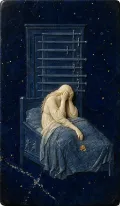
The Nine of Swords sits up awake with its fears; the Ten lies down. Together they trace a sequence from sleepless worry to the moment the worrying finally stops, and ask what rest could give you that vigilance never did.
- Ten of Swords + Ace of Swords
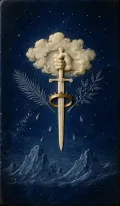
The Ace of Swords is one clear ivory blade held upright; the Ten is nine blue blades laid into a resting body. Side by side they turn attention to the cycle of the mind: once thought is exhausted, a single fresh idea has room to rise.
- Ten of Swords + Death
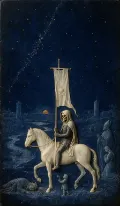
Death shows change moving through a whole landscape; the Ten of Swords shows the same threshold inside the mind. Both keep a gold light on the horizon. Together they draw attention to an ending that asks for acceptance rather than resistance, and to what can begin afterwards.
Questions to keep
- What in your life has reached its limit, and are you ready to call it finished?
- Which thought have you gone over so often that it no longer tells you anything new?
- If you let yourself rest here for a moment, what first small light might you notice?
Ask them with three cards ↗A three-card reading in which each position asks one of these questions.
A small practice
Tonight, write down one thing that is finished, draw a line under it, and beneath the line write one small kindness for tomorrow morning.
Cards that share its symbols
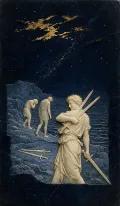 Five of SwordsShares: The resting face · Nine lapis swords · Two extended fingers · Gold dawn on the horizon · Low bank of clouds · A sky full of stars
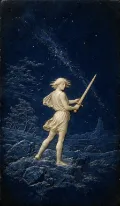 Page of SwordsShares: Nine lapis swords · The resting face · A sky full of stars · Low bank of clouds · The lapis rock ledge
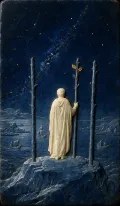 Three of WandsShares: A sky full of stars · Two extended fingers · Gold dawn on the horizon · The lapis rock ledge
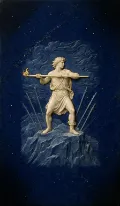 Seven of WandsShares: The resting face · The lapis rock ledge · Low bank of clouds · A sky full of stars