Two cards in conversation
Knight of Swords + Knight of Pentacles
People often bring two cards with a question about what will happen. Olivia reads a pair as a conversation instead: what each card brings, and what appears between them.
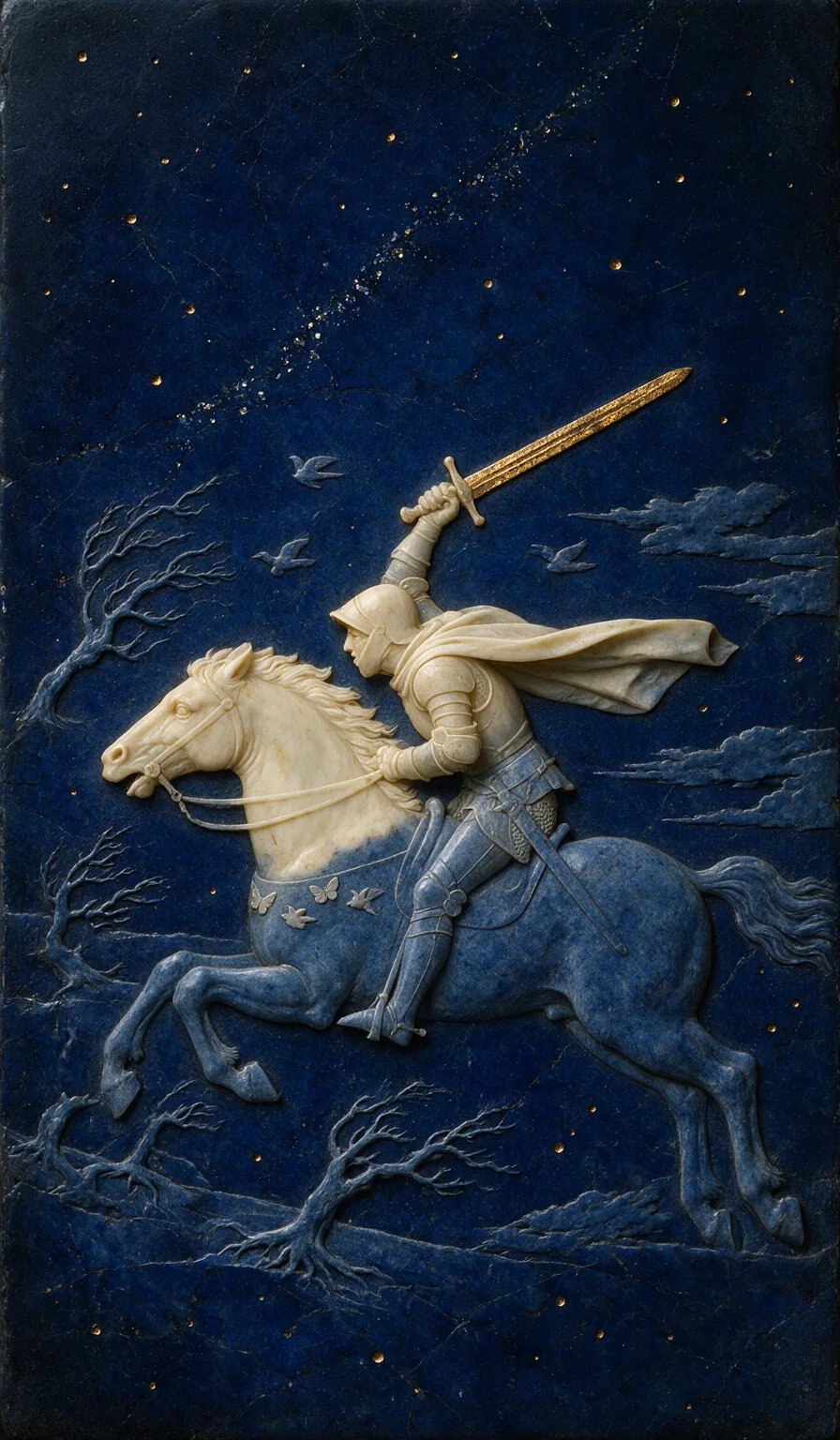
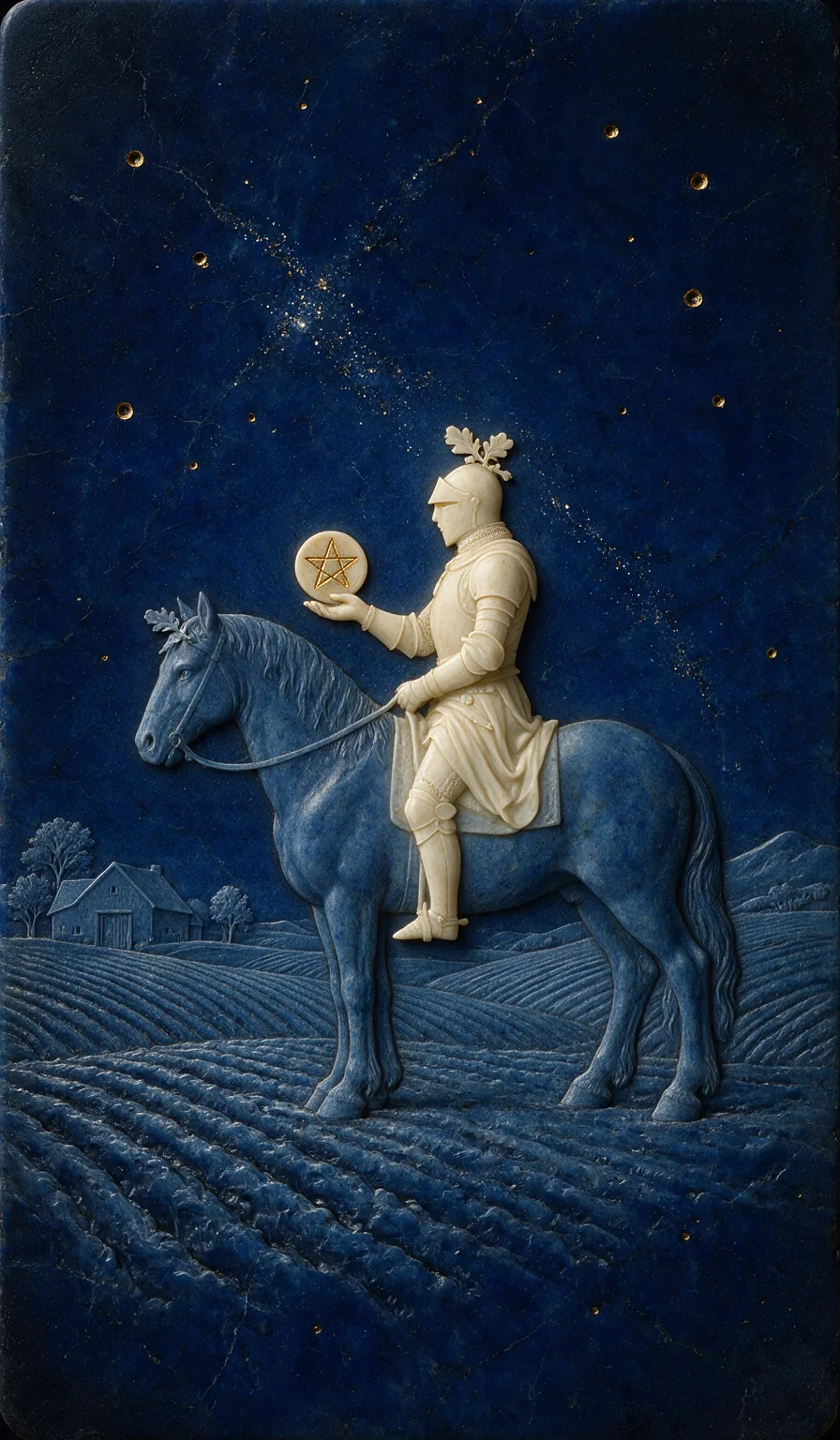
Knight of Swords: the full card ↗Knight of Pentacles: the full card ↗
What links them
- The same court rank
- Contrary elements
Carved on both cards
- The helmeted, leaning rider · The lowered visor
- Horse of ivory and lapis · The heavy, standing horse
Five ways to read this pair
Try one lens at a time. Write a sentence for each before you read anyone else’s version.
Story
Read Knight of Swords first, then Knight of Pentacles, as two scenes of one story. What changes between them?
Contrast
Where do Knight of Swords and Knight of Pentacles pull in different directions, and what does each ask of you?
One colours the other
Let Knight of Pentacles describe the way of Knight of Swords, as an adjective describes a noun. Then swap them.
A shared symbol
The same symbol is carved on both: “The helmeted, leaning rider” and “The lowered visor”; “Horse of ivory and lapis” and “The heavy, standing horse”. Follow it from one image to the other: what stays the same, what changes?
Number, suit and element
The same court rank in two elements: one way of acting, two temperaments.
One reader’s version
The Knight of Pentacles is traditionally the most unhurried of the knights. Beside the Knight of Swords the two show opposite paces, and together they draw attention to what in your situation needs speed and what needs steady ground.
With the Knight of Swords the court’s two extremes of pace meet: one rider is traditionally shown charging into the wind, the other stands on ploughed earth. Together they ask what in your situation needs quick decision and what needs time to settle.