Minor Arcana · Pentacles
Ace of Pentacles
Tarot card meaning: upright, reversed and the symbols of the Olivia image
The Ace of Pentacles is a practical opening placed in your open hand: a resource, skill or chance that becomes real only when you tend it.
- Upright
- tangible opportunitynew resourcegrounded startbody and homepatient growth
- Reversed
- missed openingpoor soilscarcity thinkingunused skillhoarding
Upright
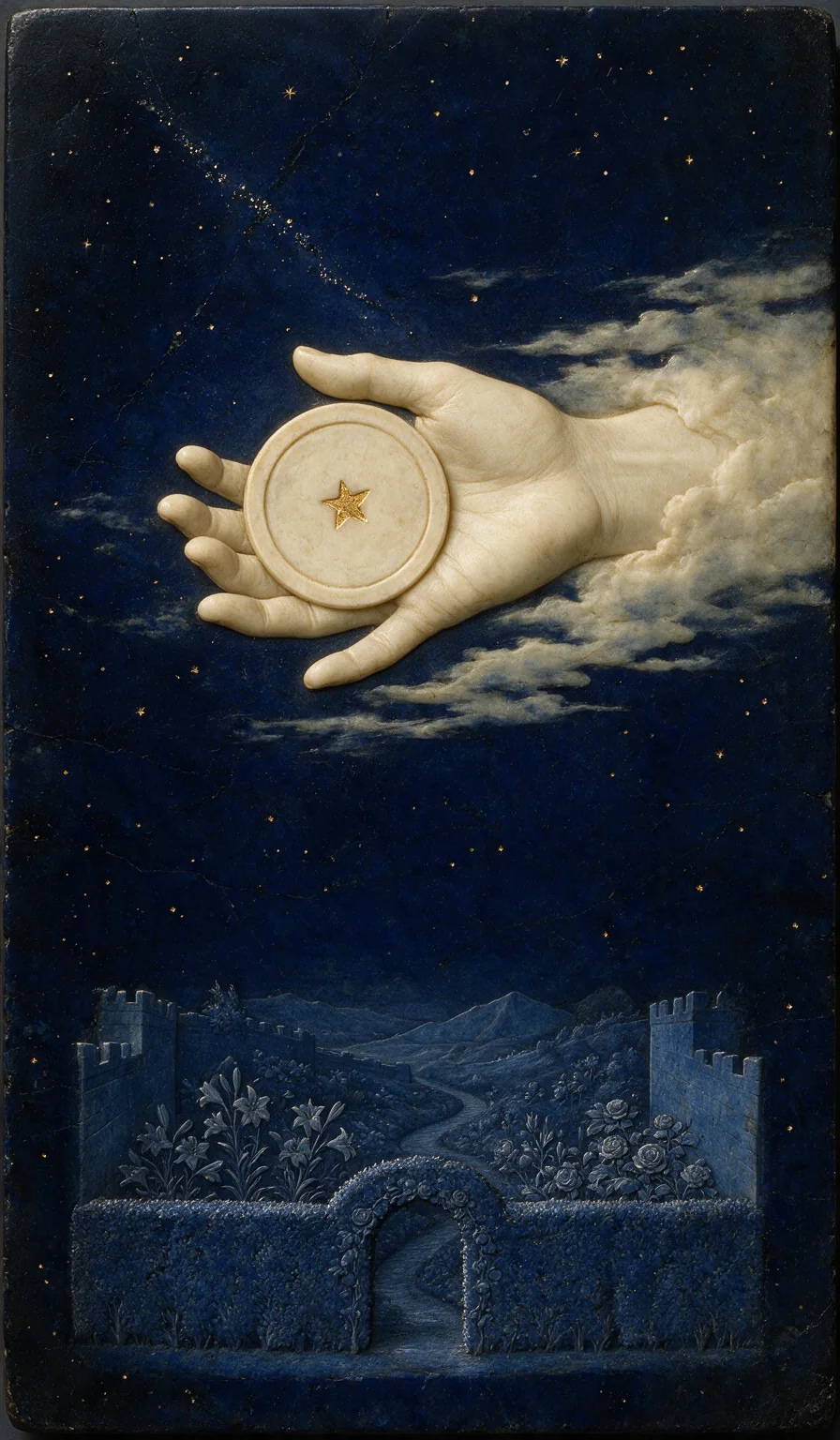
The Ace of Pentacles draws attention to something you can actually touch: an hour, a skill, a place, a sum of money, the body you live in. In Olivia’s carving a large ivory hand reaches in from a bank of cloud and holds out a thick, plain disc. There is no emblem worked across its face, only a single small gold star at the centre. The value is present, but most of the material is still unworked.
The hand does not grip. The disc rests on an open palm, so the card is less about ownership than about receiving and deciding what to do next. Far below, a garden lies between two towers: lilies on one side, roses on the other, a hedge with an arch, and a path winding out toward the mountains. The gift in the sky is meant for that ground. It asks to be planted, carried and used, not admired from a distance.
Upright, this Ace invites a modest, concrete beginning: clearing a corner to work in, booking the first lesson, walking the same route each morning, mending what you already own. Its strength is in the small scale. Ask what conditions you can offer this opening (time, attention, a little space) and begin with the step you could repeat next week as well as today.
Reversed
Ace of Pentacles reversed can show a practical opening that has not found its ground. The disc may be offered, but the soil is not ready: no time set aside, no space, no plan for the first step. Sometimes it points to a chance you passed over and still turn over in your mind, so that regret hides what is still available.
The reversal can also turn inward, toward holding too tightly. The open palm in the image becomes a closed fist: saving without living, or waiting for a perfect, certain start before you move. Look at what you already have in hand, however plain, and choose one small, sustainable way to put it to use.
Read the image
Every element below is carved into this card. Scroll, hover or press a number to follow it on the image.
The ivory disc and gold star
What you seeA thick, plain ivory disc with a raised rim around a slightly recessed face rests on the open palm; near its centre sits one small five-pointed star of gold.
What it carriesThe pentacle is the suit’s emblem of earth: coin, body, craft and the ground you stand on. The traditional image carries an interlaced pentagram; here the sign is pared to a solid gold star on bare ivory, a single point of value in a still unworked piece of material.
Follow this symbol through the deck ↗The open palm
What you seeA large ivory hand, palm upward, reaches in from the right with its wrist bare; the fingers extend relaxed past the disc’s left edge, and nothing closes over the disc, which rests on the palm ungripped.
What it carriesEvery Ace shows a hand from the clouds: something given that you did not make yourself. In Pentacles the hand offers rather than wields. Because it holds the disc open and loose, the gift is not yet anyone’s possession; it waits to be taken up and used.
Follow this symbol through the deck ↗The cloud at the edge
What you seeA dense bank of ivory cloud, carved in soft rounded masses with lapis showing through its gaps, fills the right edge; the wrist emerges from it and wisps trail left beneath the hand.
What it carriesThe cloud is the traditional source of the Aces, a reminder that openings often arrive from beyond your planning. Here it also runs underneath the hand like a support, so what comes from outside is steadied as it is offered.
Follow this symbol through the deck ↗The trail of stars
What you seeA narrow diagonal band of glittering silver specks crosses the upper left sky, running from near the top left corner down toward the hand, among scattered gold flecks and fine cracks in the stone.
What it carriesOlivia adds this band to the traditional composition. Read with the card, it draws a line from the vast and distant down to something small enough to hold, the way a large possibility becomes a single, tangible start.
Follow this symbol through the deck ↗The path to the mountains
What you seeCarved in pale lapis, a narrow path winds from the hedge arch back through low hills toward a range of mountains with one peak higher than the rest.
What it carriesTraditionally the path beyond the garden leads to the mountains of long effort and larger aims. It shows that this Ace is a beginning with somewhere to go; the gift in the hand becomes meaningful only when you walk it out into the world.
Follow this symbol through the deck ↗The crenellated towers
What you seeSquare towers of pale blue lapis, with stepped crenellations and visible courses of stone, rise at the left and right edges of the garden; a crenellated wall runs back into the hills from the left tower.
What it carriesTowers are not part of the traditional Ace of Pentacles garden. Here they frame the scene as a protected, walled place, pointing ahead to the security and settled household the suit builds toward by its later numbers.
Follow this symbol through the deck ↗The lilies on the left
What you seeTall lilies with open, star-shaped blooms and long pointed leaves stand in a cluster on the left, carved in lighter blue lapis and rising above the top of the hedge.
What it carriesLilies grow in the traditional Ace of Pentacles garden and are commonly read as purity of intention. They suggest that what grows here grows best from a clean motive: tending a thing for its own sake, not only for what it could return.
Follow this symbol through the deck ↗The roses on the right
What you seeFull, many-petalled roses among serrated leaves fill the bed on the right, carved in lighter lapis just above the hedge line and beside the right-hand tower.
What it carriesRoses stand for desire, love and cultivation. Paired with the lilies, as in the Magician’s garden, they balance clean intention with real wanting. Olivia gives each flower its own side, so the garden holds both motives in view.
Follow this symbol through the deck ↗The arch in the hedge
What you seeA low, dense hedge of textured lapis crosses the foreground; at its centre it rises into a rounded arch wreathed with small carved roses, and the path passes through its opening.
What it carriesThe hedge arch is a traditional threshold between the tended garden and the wider world. It marks the moment of stepping out with what you have been given, from safe cultivation into practical use, through an opening that is narrow but clearly there.
Follow this symbol through the deck ↗
The number
Aces are the root of a suit, the seed before any number unfolds it. In Pentacles, the suit of earth, that seed is material: a body, a place, an hour, a skill, a small sum, something with weight that can be held and tended. Where the Ace of Wands offers a spark and the Ace of Cups an overflow, this Ace offers raw substance. Everything that follows in the suit, the juggling of the Two and the craft of the Three through to the household of the Ten, grows from it.
The tradition
In the Golden Dawn system this card is the Root of the Powers of Earth, and each Ace stands for Kether, the crown of the Tree of Life, within its element. Aces take no decan: Book T places them at the north pole of the heavens, above the zodiac, as the roots of their elements. The suit descends from the Coins of Italian and Marseille decks, where the Ace is a single large ornamented coin; Waite-Smith calls the suit Pentacles and Crowley’s Thoth deck calls it Disks. Pamela Colman Smith’s 1909 design set the hand and cloud above a lily garden with an arched hedge and a path toward mountains.
Love, work and self
- Love
- In love and close relationships, the Ace of Pentacles favours care you can see and touch: a regular evening kept free, a meal cooked together, a shared space made more comfortable. It can point to a bond ready to become more rooted in daily life. It also turns attention to how you tend yourself: sleep, food, rest and a home that supports you. Like the disc on the open palm, affection here is offered plainly and grows through steady practice.
- Work
- At work, in study and with money matters, this Ace can point to a practical opening: a new role, a course, a small commission, a skill that could become useful. It favours careful groundwork over large leaps. Write down what the opening requires in hours, tools and support, and what you can realistically give it. Any financial decision deserves proper advice; the card simply asks you to notice the resource and plan how to tend it.
- Self
- For your own life, the Ace of Pentacles invites you to take your body and your daily surroundings seriously as places where change begins. The garden in the image is hedged and tended, with a path leading out of it. Consider which small, repeated action would make your ground more fertile: a walk, a tidy desk, a set bedtime, a savings habit. Growth here is slow and physical, and it is built from ordinary days.
In a spread
Read the card through each position before you look at Olivia’s version. A position is a question, and the same card answers each one differently.
The situation
What aspect of the situation deserves attention?
Olivia’s readingAt the heart of a question, this card suggests the matter turns on something tangible and within reach: a resource, skill or opening that needs practical tending rather than more thought.
What complicates it
What tension or assumption deserves a closer look?
Olivia’s readingAs a challenge, it can show an opportunity left in the open hand: undervalued because it looks plain, or delayed while you wait for conditions that feel completely certain.
A helpful next step
What small action could help you understand or respond?
Olivia’s readingAs advice, it invites one small, physical first step you can repeat, such as setting aside an hour, clearing a space or starting a simple record of what you have.
In conversation with
- Ace of Pentacles + The Magician
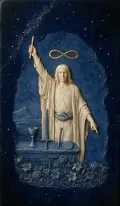
The Magician’s table traditionally holds a pentacle among the four suit tools, with roses and lilies framing the figure. Together the two cards ask how a skill you already have could be put to practical use.
- Ace of Pentacles + Four of Pentacles
The Four of Pentacles traditionally shows a coin held tightly to the body. Beside this Ace’s open palm, the pair draws attention to the difference between keeping something safe and keeping it so close that it cannot grow.
- Ace of Pentacles + Ten of Pentacles
The Ten of Pentacles completes the suit that this Ace begins. Seen together they trace the long arc from a single coin in the hand to a settled home, and ask which small beginning could support a lasting structure.
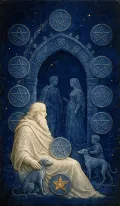
Also read withPage of PentaclesAll pairs ↗
Questions to keep
- What tangible resource, skill or opening is already resting in your hand, even if it looks plain?
- What conditions of time, space or support would help this beginning take root?
- Where might you be holding on so tightly to security that nothing new can grow?
Ask them with three cards ↗A three-card reading in which each position asks one of these questions.
A small practice
Choose one plain object that stands for a practical beginning, place it where you work, and each day for a week do one small thing that tends it.
Cards that share its symbols
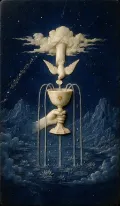 Ace of CupsShares: The cloud at the edge · The open palm · The lilies on the left · The trail of stars
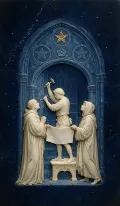 Three of PentaclesShares: The ivory disc and gold star · The roses on the right · The arch in the hedge · The open palm
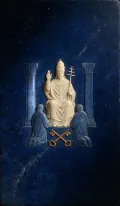 The HierophantShares: The open palm · The roses on the right · The lilies on the left
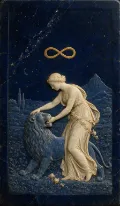 StrengthShares: The trail of stars · The open palm · The roses on the right